
EN

In a nutshell
Masterdesi.com doesn’t try to be subtle. It puts its promise right in front of you: “Our Desi porn site has hot Indian porn free for you here.” No barriers, no sign-ups, no payments — just instant access to exactly what users are searching for.
And like many platforms built around that promise, it delivers… at least on the surface.
But the deeper question isn’t whether you’ll find content. It’s what you might run into along the way.
The domain history shows that Masterdesi.com has been around for years, but longevity doesn’t automatically mean trust.
Registered in March 2019, the site has had time to establish itself, yet it hasn’t built the kind of transparency or credibility you’d expect from a long-standing platform. Instead of evolving into a more structured or accountable service, it still operates with very limited public information.
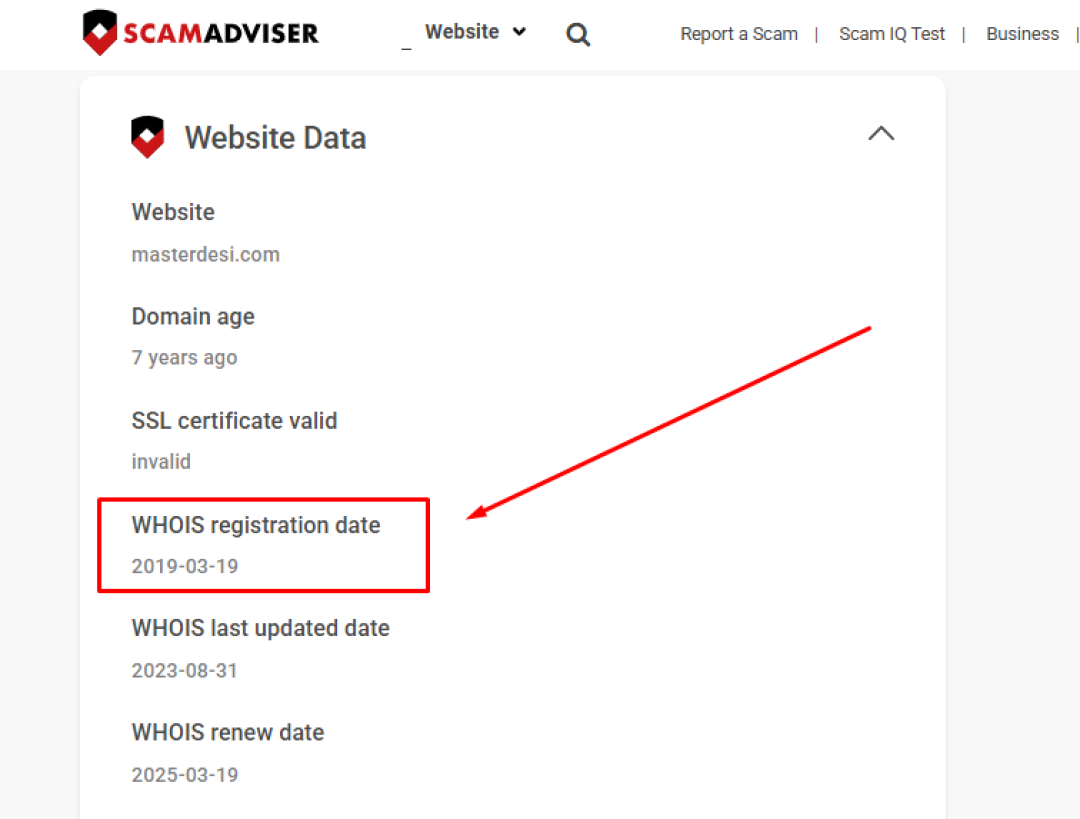
In some cases, older domains without clear ownership can be more concerning, not less — especially when they continue to operate without improving trust signals.
The ownership of Masterdesi.com is unclear, with no visible company or identifiable operator behind it.
There’s no official business name, no verifiable contact details, and no real indication of who is responsible for running the platform. That lack of transparency makes it difficult to know who is handling your data — or who would be accountable if something goes wrong.
When a site attracts consistent traffic but avoids revealing who’s behind it, that’s usually a deliberate choice, not an oversight.
The origin of the content is unclear, which raises potential ethical and legal concerns.
Like many free aggregation platforms, Masterdesi appears to host or display content without clearly explaining where it comes from or how it’s verified. There’s no visible system for confirming ownership, consent, or licensing.
When content sourcing isn’t transparent, it often means the platform is operating in a gray area where accountability is limited.
The real cost often comes in the form of data exposure, intrusive ads, and reduced control over your browsing experience.
While there’s no upfront payment, users may unknowingly interact with third-party scripts, give away browsing data, or deal with persistent interruptions. These trade-offs aren’t always obvious at first — they tend to build over time.
That’s the part many users don’t consider when everything appears “free.”
Masterdesi.com may give you what you’re looking for, but the bigger question is what you’re giving up in return. With no clear ownership, limited transparency, and a model that likely depends on aggressive advertising, the risks go beyond just watching a video. If you choose to use it, stay cautious — avoid unnecessary clicks, don’t enable permissions, and be mindful of where each interaction leads. In many cases, platforms like this offer convenience upfront, but uncertainty underneath.
This article has been written by a scam fighter volunteer. If you believe the article above contains inaccuracies or needs to include relevant information, please contact ScamAdviser.com using this form.
Adam Collins is a cybersecurity researcher at ScamAdviser who operates under a pseudonym for privacy and security. With over four years on the digital frontlines and 1,500+ days spent deconstructing thousands of fraud schemes, he specialises in translating complex threats into actionable advice. His mission: exposing red flags so you can navigate the web with confidence
