
EN
In today’s digital world, scams have become more creative and convincing than ever. One of the most common tactics used by online scammers is the “lottery winner giveaway” message and people are increasingly reporting about being scammed by such scams.
These messages often appear on platforms like Facebook, WhatsApp, Instagram, SMS, and even on email. They typically claim that the sender has won a huge amount of money in a lottery and is now looking to share it with “needy people” or strangers online.
What people should understand is that although these messages looks kind and generous, they are designed to trick people into losing money. Understanding how these scams work is the first step toward protecting yourself and others.
Scammers have become expert in writing their messages in such a way that they always look emotional and trustworthy. Here is one of such recently trending messages that looks very real:
"Hello how are you doing, I’m Julie leach from USA and I’m 54 years old , I’m a Business woman but my pastor preached to us on this week Sunday about helping the needy, and it really touched, so that’s why I’m here to help other for a little out of what I have, I’m texting you to see if you need some money to payoff bills or do some other things. I will be glad to help you out ??
I'm a lottery winner that win 310.5 million dollars so I think I can help people that need money for bill that is why am here"
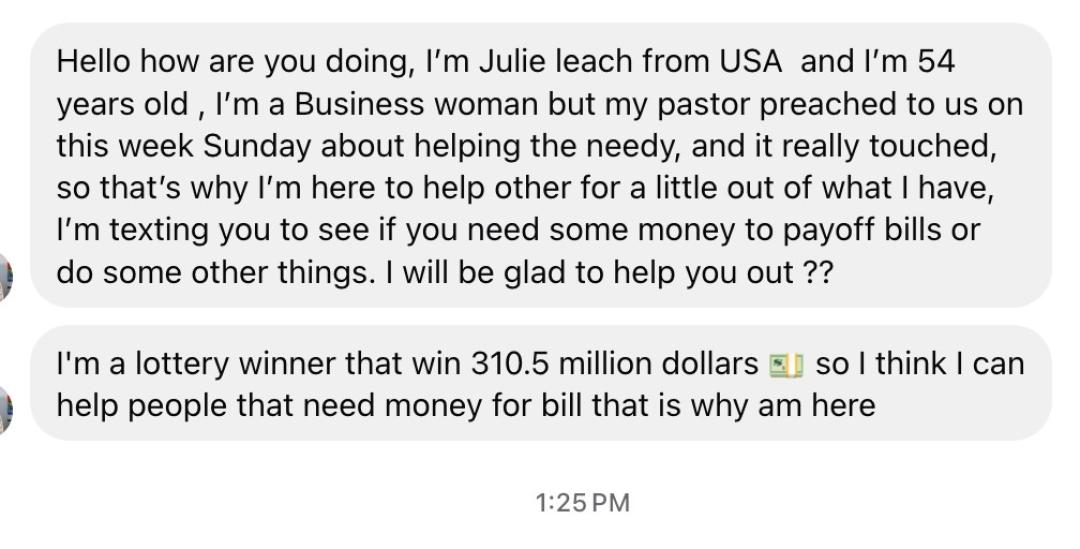
The goal of such messages is to make recipients feel special and chosen. By mixing religious reasoning, financial hardship, sentiments and emotions, scammers try to convince people that their offer is genuine.
As per many victims who replied to these messages, have reported a similar pattern such as:
Staying safe online does not need any magical skills or advanced technical knowledge. Here are simple steps everyone can follow:
If someone you don’t know suddenly messages you saying they want to give you money, you should treat it as a scam. Legitimate people or organizations will never approach strangers out of nowhere with big offers. The safest thing to do is ignore the message, delete it, and avoid replying because even a single response may encourage scammers to target you further.
This is one of the biggest warning signs. Scammers usually ask you to pay a small amount first, saying it’s for processing, verification, tax, transfer charges or something like that. In reality, genuine giveaways, charities, or companies mostly don’t ask you to pay anything before receiving a prize. If someone asks you to send money in order to get money, it is most likely a scam.
Never share sensitive information such as your full name, address, bank details, OTPs, passport or ID numbers, or any private documents. Scammers can use these details to steal your identity, access your accounts, or cause financial harm. Even information that seems harmless can be dangerous in the wrong hands.
If you are unsure whether a message is real, search the sender’s name or the exact message online. Many scam messages are copied and used repeatedly, so chances are high that someone has already reported it. A quick search can help you confirm whether it’s fake.
Social media platforms, messaging apps, and email services all have a “Report” option. Use it whenever you receive suspicious messages. Reporting helps the platform remove fraudulent accounts, preventing others from being tricked by the same scammer time and again.
Scammers often target elderly people, students, or anyone who may not be familiar with online fraud. Talk to your family and friends about these types of scams so they can know and stay alert. A simple conversation or reminder can save someone from losing their money or personal information.
Scammers are skilled at tapping victims into emotions. People experiencing financial stress may find hope in these messages. Some feel flattered that someone wants to help them. Others simply trust too easily. Understanding that scammers are trained manipulators helps you stay aware and realistic.
Lottery giveaway messages may seem harmless at first glance, but they are carefully well designed traps. These scams have caused many individuals to lose their savings, personal data, and peace of mind. The safest approach is simple, never trust unexpected offers of money, especially from strangers online.
By staying informed, verifying suspicious messages, and refusing to pay any upfront fee, you can protect yourself and help build a safer online community. Always remember: Real lottery winners don’t look for strangers to give away their money.
Image Source:
Disclaimer: This article has been written by a Scam Fighter Contributor. If you believe the article above contains inaccuracies or needs to include relevant information, please contact ScamAdviser.com using this form.
