
EN
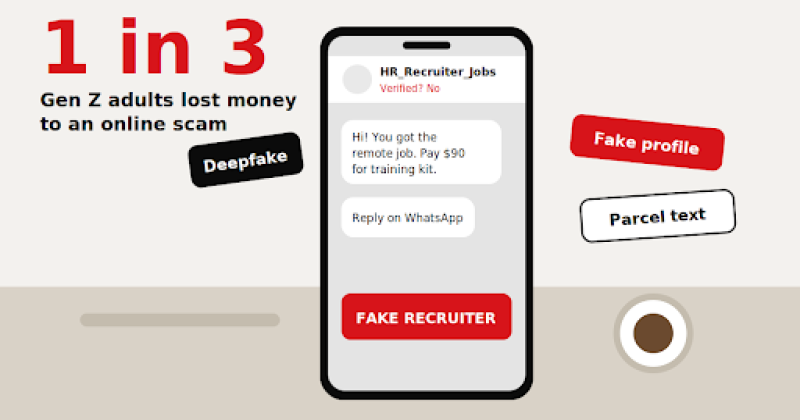
Growing up online has not made Gen Z immune to cyber fraud. More than one in three Gen Z adults reported losing money to an online scam in the past year, according to new research from cybersecurity firm McAfee.
The findings, published on October 19 by McAfee’s Content Editor in Chief Brooke Seipel, show that young adults encounter deceptive digital content at higher rates than Americans overall:
Fake Social Media Profiles: Encountered by 51% of Gen Z adults in the past year, compared with 41% of all Americans.
Synthetic Imagery: 51% encountered AI-generated images passed off as real, compared to 44% nationwide.
Deepfakes: Two in five (40%) reported coming across manipulated or deepfake-style video content.
The data underscores that digital familiarity is no longer a foolproof shield. As generative AI makes deceptive storefronts, fake personas, and altered media cheaper to produce and harder to identify, the traditional instinct of relying on whether something simply "looks fake" is quickly becoming obsolete.
The job market has emerged as an especially vulnerable channel. McAfee found that 39% of Gen Z adults encountered a fake recruiter or employment scam over the past 12 months (compared with 31% across all age groups), and 57% reported suspecting a job offer or recruiter outreach was fraudulent. The persistent threat is altering behavior: 65% said scam concerns caused them to hesitate or skip applying for a role online altogether.
When evaluating actual financial losses across the broader survey of 5,000 U.S. adults—where 31% of all respondents reported losing money to a scam—Gen Z saw outsized losses across three common attack vectors:
These schemes succeed because they mimic routine daily interactions: checking a parcel status, troubleshooting an app issue, or responding to a direct message.
Abhishek Karnik, McAfee's Head of Threat Research, emphasized the need for caution around routine communications: "Treat unexpected messages regarding requests for money or help with skepticism," Karnik noted, warning that compromised accounts and clone profiles frequently target existing networks. Contacting an acquaintance directly through a separate, trusted phone number remains the safest verification step.
To combat automated, AI-driven scams, security researchers advise building explicit verification checkpoints into online routines:
Cross-Check Recruiters Independently: If contacted about a job opening, navigate to the employer’s official careers page directly. Never pay upfront fees for equipment or background checks, and be wary if a hiring manager insists on moving conversations to private messaging apps like WhatsApp or Telegram.
Investigate Unknown URLs: Before entering login credentials or financial details into an unsolicited tracking portal or support link, verify domain health. Free analysis tools like ScamAdviser expose domain registration age, hosting details, and community flags, helping identify sites set up solely to harvest credentials. You can also install the ScamAdviser Mobile App to flag suspicious sites in real time as you browse.
Resist Artificial Urgency: Scammers rely on manufactured pressure to bypass critical thinking. Take time to verify emergency texts, refund claims, or prize notifications before authorizing payments.
If you suspect you have transferred funds to a fraudulent operator, notify your banking institution immediately, document message histories and receipts, and submit the URL through the ScamAdviser Report a Scam portal to help protect other consumers.
Source: Brooke Seipel, "The Top 5 Scams Hitting Gen Z Harder Than the Rest of America," McAfee Blog, October 19, 2026.
