
EN
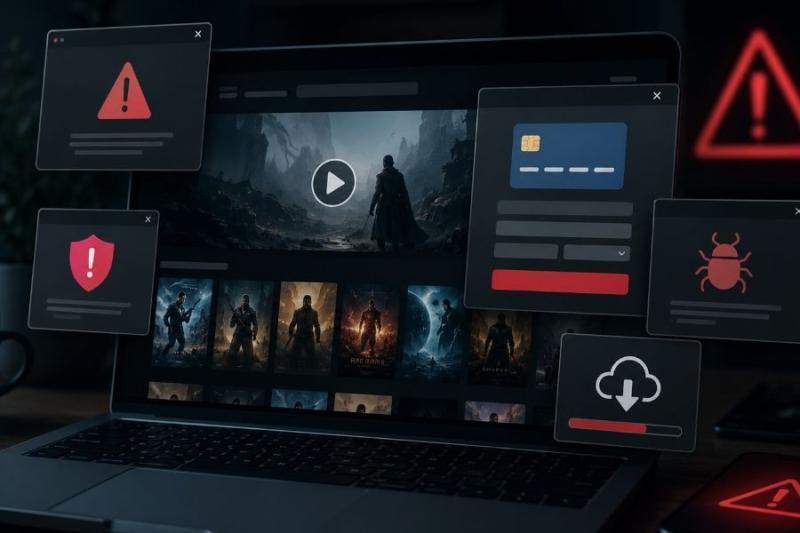
Free movie streaming site scams trick users by tempting them with the latest movies they would normally find on Netflix or their local movie theaters. These websites have movie posters, a search bar, ratings, and a clean play button, and everything signals to a fun night at home with some popcorn. But the risk usually begins before the video even starts.
Many fake streaming websites use the same trust tricks: familiar movie artwork, “free access” claims, fake play buttons, pop-ups, and sign-up forms that ask for personal or payment details. This guide explains how free movie streaming site scams work, why some free movie sites are unsafe, and what to do if you already clicked, signed up, or paid.
A fake streaming website may use professional design, movie categories, posters, trailers, ratings, and “HD” labels. Some pages even use titles that people are already searching for, such as new cinema releases or popular TV shows. The page then creates the feeling that the content is only one click away.
So, here is how it goes: you search for a new movie, land on a site, and see a large play button. Then the page asks you to create an account, allow notifications, download a player, or “verify” that you are human.
Watch for wording such as:
These phrases do not prove a scam on their own, but they are risky when the site has no clear company, no licensing information, no real support, and no trusted reputation.
As an example of free movie streaming scams, we recently reviewed Beforeflix.com after users searched for information about the site. The site claimed to give access to free movies, but our analysis raised serious concerns, similar to what is explained.
Beforeflix.com has a Trust Score of 1, and the review found warning signs such as recent domain registration, low visitor signals, and a movie download-related risk.
We also raised a practical question in that article: why would a “free” movie website need your personal details?
That question should guide your thinking on every free movie site. If the website claims to stream content without a subscription, but then asks for your email, password, phone number, social login, or card details, that should raise an eyebrow. The site may care more about collecting data than showing a movie.
Here is something else we said in that report that you should always keep in mind: “Always remember — if the service is free, you might be the product.”
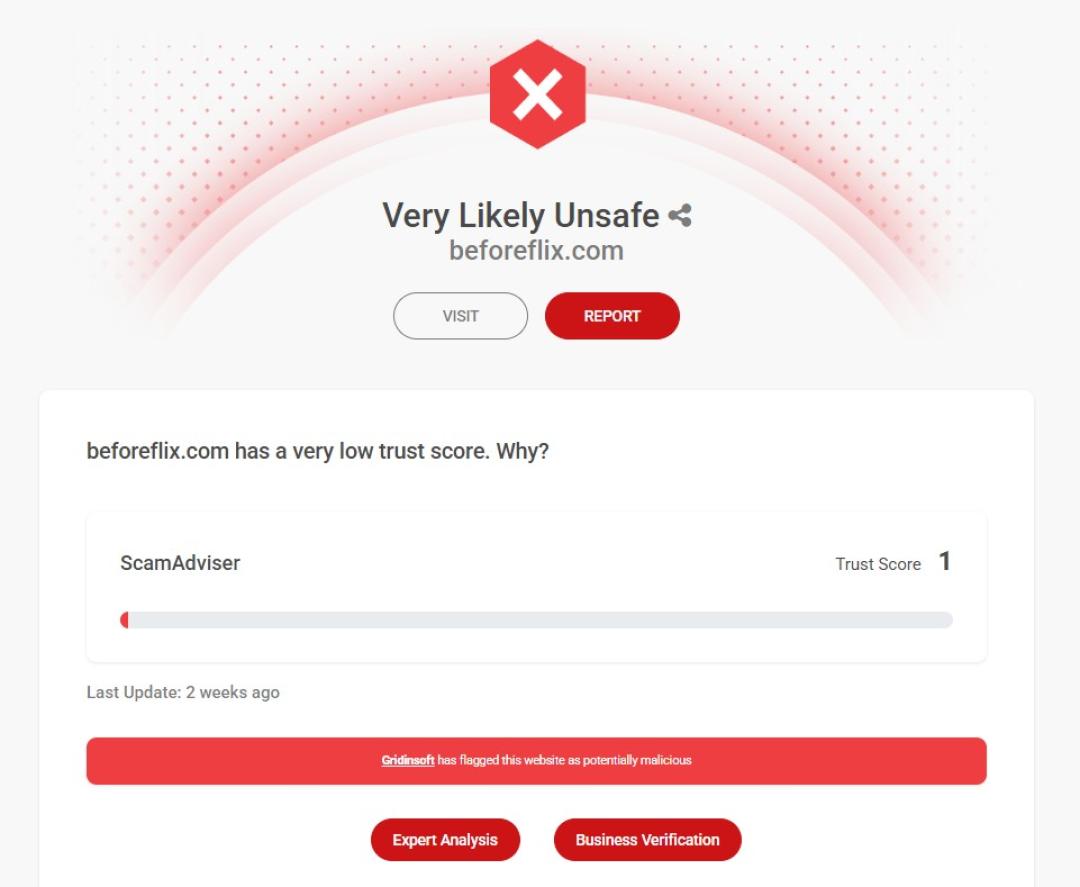
Beforeflix.com is not safe based on our 40+ independent data sources (Image Credit: ScamAdviser)
One of the most classic tricks in the scam book is copying an official entity. Fake streaming websites usually copy streaming platforms like Netflix or Disney, but that is not the only pattern. Here are some red flags that you should know beforehand:
A real streaming platform usually plays the video in the same interface.
That redirect chain can push you toward adult ads, fake security warnings, browser notification prompts, or suspicious download pages.
A free movie site may ask for your email before it lets you watch.
The risk grows if the site asks you to log in with Google, Facebook, or another social account. A fake login page can steal your credentials.
Some pages claim they need your card to confirm your age, location, or identity.
Never enter payment details on a site that cannot prove who runs it, where it operates, and what service it legally provides.
If you have already paid, check our guide on how to get your money back after a scam.
A fake video player, fake virus alert, browser extension, APK file, codec, or “HD player” can carry malware.
You do not need a special player to watch a normal video in a modern browser. If a random website says you must download one, leave the page, and don’t take any download risks.
Check the footer, terms page, privacy policy, and contact page.
A legal streaming service can usually tell you who runs the platform, what rights it has, and how it handles your data.
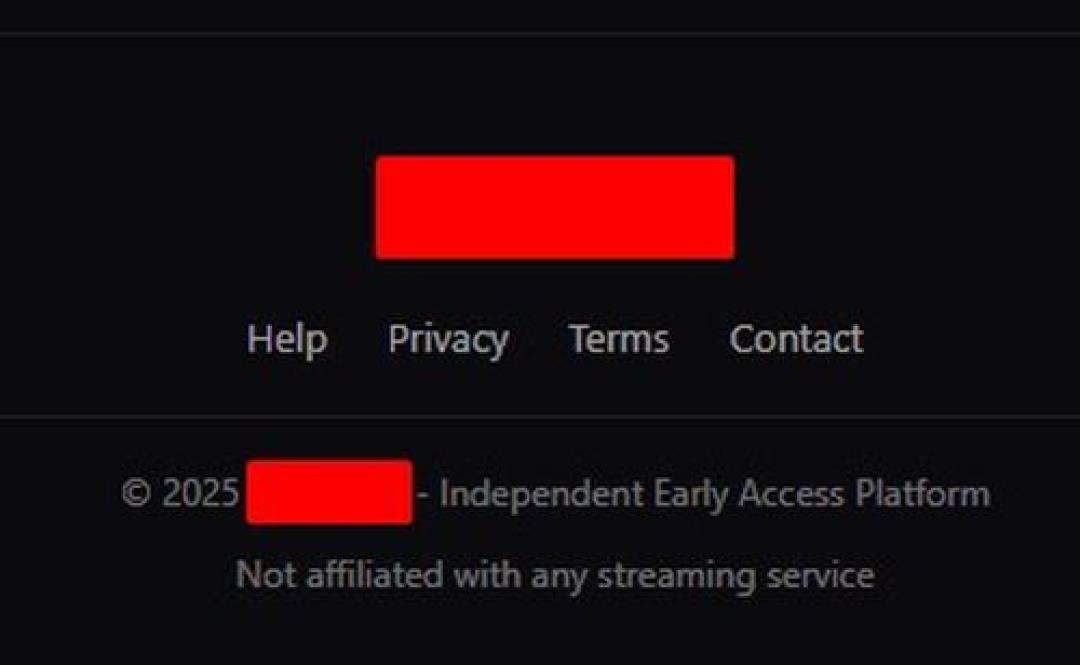
If there is no way to see company information or access any of the pages in the footer, be extra careful! (Image Credit: ScamAdviser)
Some free movie sites are safe, but only when they are legal, licensed, and run by known companies.
The phrase “free movie site” covers two very different things. A legal ad-supported service can show free content because it has licensing agreements and earns money from ads. A risky site may use the same word “free,” but it may host pirated content, send users through unsafe ads, or collect data without clear consent.
Based on our reviews and the reports we received, here is what you can check:
Site Behavior Lower Risk Higher Risk Company details Clear owner and support Hidden owner or copied pages Content Licensed or older ad-supported titles Brand-new cinema releases for free Payment No card needed for free content Card needed for “verification” Video player Plays in normal browser Requires unknown download Ads Clear, limited ads Aggressive pop-ups and redirects Reputation Established platform New domain with little historyUse a quick safety check before you click play, sign up, or download anything.
Copy the full website address and paste it into ScamAdviser’s website checker. Read the Trust Score and the explanation behind it.
Pay attention to:
A low score does not replace your own judgment, but it gives you a fast risk signal before you share anything.
Search for the site name with terms such as “scam,” “reviews,” “subscription,” “virus,” or “charged my card.” This can reveal complaints from users who already tried the site.
Be careful with fake review pages. Some risky networks create positive-looking pages to make their own sites look trusted.
If a new cinema release appears on a random free site before the official streaming release, treat that as a warning sign. Legal streaming rights cost money, and major titles usually appear through official distributors.
A site that claims to have everything, everywhere, and for free is enough to create suspicion.
Do not install unknown video players, codecs, browser extensions, APKs, or “streaming apps” from random sites. Also refuse browser notification requests from streaming pages.
A legitimate free streaming platform should not need your card to prove that you are human. If a page asks for payment details while promising “no charge,” close it.
The Trust Score checks many website signals, such as domain age, technical setup, ownership details, traffic signals, public reports, user reviews, and security data. This matters because fake streaming sites often look professional on the surface.
For example, a streaming site may have a polished homepage but still show warning signs behind the scenes. A newly registered domain, hidden ownership, risky redirects, malware reports, and unrealistic content claims can all point toward danger.
That is why ScamAdviser’s website checker works well as a first step. It gives you a risk signal before you create an account, download a file, or enter payment details.
Use legal platforms that clearly explain who runs the service, how they make money, and what content they offer.
A safe free service usually has one of these models:
A risky site usually avoids clear ownership and overpromises access to new releases. That is the difference you need to check before you press play.
Can a free movie streaming site give my device a virus?
Yes, a risky free movie streaming site can expose your device to malware through fake players, unsafe downloads, malicious ads, or redirect pages.
Why do fake streaming websites ask for card details if the movie is free?
Fake streaming websites may ask for card details to start hidden subscriptions, test stolen payment data, or misuse the card later.
What should I do if I signed up for a fake streaming website?
Change your password, remove browser notification permissions, watch for phishing emails, and contact your bank if you entered payment details.
Are all free movie sites scams?
No, some legal ad-supported services offer free movies, but unknown sites with new releases, hidden ownership, fake play buttons, and payment checks are high risk.
Can a free streaming site steal my email password?
Yes, a fake streaming sign-up or fake social login page can collect your login details and use them against your other accounts.
Written by: Jamie James
