
EN
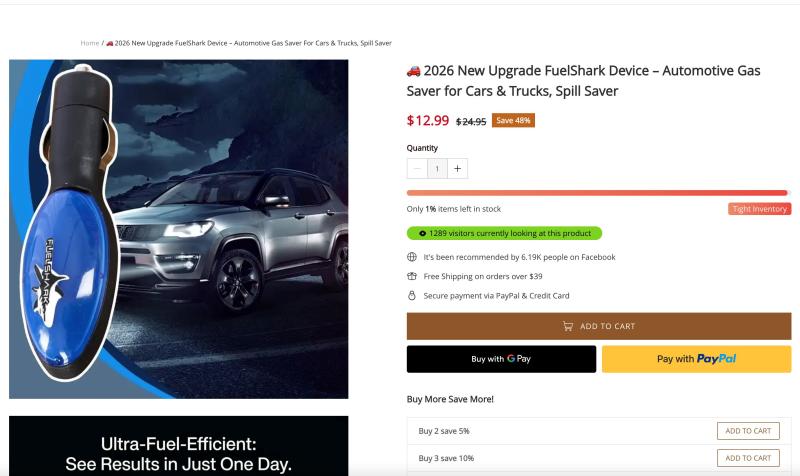
Plug-and-Play fuel saver devices accessories like NeoSocket and FuelShark are marketed as tools designed to potentially improve vehicle fuel economy by stabilizing the electrical system when inserted into a 12-volt socket. While the concept sounds appealing, independent technical analyses appear to indicate that these non-connected electronics may not provide measurable improvements in real-world efficiency.
According to marketing materials, plug and play fuel saver devices such as the Fuel Shark and NeoSocket seem to be designed to improve gas mileage by a stated 10% to 35%. The user instructions appear remarkably straightforward: a motorist simply inserts the device directly into the vehicle's 12-volt socket.
Promotional documentation indicates that the internal components may act as an electrical optimizer. The promotional text describes a process where the device seems to stabilize the vehicle's electrical system, which may lower the load on the alternator, thereby allegedly freeing up engine power and potentially decreasing overall fuel consumption.
When conducting a neutral assessment of user feedback and electronic design, certain elements may offer minor, localized functions:
Visual Confirmation of Fuel Saver Devices Like FuelShark and NeoSocket:
The devices feature an integrated light-emitting diode (LED). When connected to a live auxiliary port, this bulb glows consistently, which appears to confirm that the vehicle's socket is successfully delivering electrical current.
Basic Electrical Capacitance:
Independent reverse-engineering teardowns, such as those featured in specialized reports on PerformanceChipGuide, reveal that the hardware generally houses a small capacitor and a safety fuse. In theory, capacitors serve to store and release minuscule amounts of electricity, which may filter minor electronic noise within that specific auxiliary circuit.
The Placebo Effect:
Public reviews indicate that some drivers notice a temporary improvement in mileage after installation. Automotive experts note that this change may be attributed to a subconscious shift in driver behavior; motorists tracking a new device often accelerate more gently and brake early, which naturally increases fuel efficiency.
According to publicly available scientific research and professional teardowns, there appear to be significant technical details regarding the core claims of these gadgets:
No Engine Connectivity:
A standard 12V port seems to be designed purely to supply accessory power. According to automotive engineering discussions, this outlet appears to lack any data connection to the Engine Control Unit (ECU) or the fuel injection system. Consequently, the device may not alter fuel mapping, may not change ignition timing, and may not regulate air-to-fuel ratios.
Insignificant Storage Capacity of Fuel Saver Devices Like FuelShark and NeoSocket:
According to analysis published by environmental auto platforms like Green Car Reports, the miniature capacitors used in these plugs seem to possess roughly 1/120,000th of the energy storage capacity found in functional automotive efficiency systems. The internal storage appears to hold just enough power to keep the device's internal LED lit for a few moments after the engine turns off.
Pre-Existing Stabilization:
Every modern vehicle features a large, integrated lead-acid battery alongside a heavy duty alternator voltage regulator. Because these built-in systems seem to manage electrical fluctuations thousands of times per second, secondary stabilization from a tiny plug-in accessory may be entirely redundant.
Based on examinations of vehicle circuitry, a simple plug and play fuel saver devices like Fuel Shark and NeoSocket may function adequately as a decorative addition or a basic outlet tester. However, according to standard testing methods like those utilized by the U.S. Environmental Protection Agency (EPA) for valid fuel saving technologies, secondary, non-connected interior electronics do not appear to yield measurable changes in real-world energy output.
Motorists looking for a reduction in fuel consumption may find more consistent success through routine vehicle maintenance, proper tire inflation, and conservative driving habits.
The information provided in this article is for educational and informational purposes only and represents a review of publicly available automotive data, independent teardowns, and general engineering principles. This article is entirely neutral and is neither intended to promote nor condemn any specific product or brand.
This content does not constitute professional automotive, mechanical, or legal advice. Individual experiences with the mentioned products may vary depending on vehicle make, model, age, and driving habits. The inclusion of third-party links does not imply endorsement or verification of their absolute accuracy, and readers are encouraged to perform their own independent research before purchasing any automotive accessory.
All product names, logos, brands, images, and trademarks referenced in this article, including "NeoSocket" and "Fuel Shark", are the property of their respective trademark and copyright holders.
These names and images are used strictly under fair use guidelines for identification, educational evaluation, and critical review purposes only. The use of these trademarks and visual representations does not imply any affiliation with, endorsement by, or sponsorship from the respective manufacturing companies or trademark owners.
This article has been written by a Scam Fighter Contributor, De-Reviews.com Team. If you believe the article above contains inaccuracies or needs to include relevant information, please contact ScamAdviser.com using this form.
De-Reviews.com Team is a group of scam researchers, editors, and online safety advocates dedicated to exposing online fraud and helping consumers stay safe online. The team has been investigating scams, fraudulent websites, phishing campaigns, and other online threats since 2014. Read the Full Author Profile.
