
EN
Last updated: November 18, 2026 · First checked: Nov 3, 2026
Short answer: AdSelect.net is a "paid-to-click" earning platform that promises USDT crypto rewards for watching ads, checking in, sharing stories and recruiting friends. There are serious doubts about it. It names no company behind it, contradicts itself on basic rules, and claims to be new while running on a domain first registered in 2003. Platforms like this carry a high risk of never paying out.
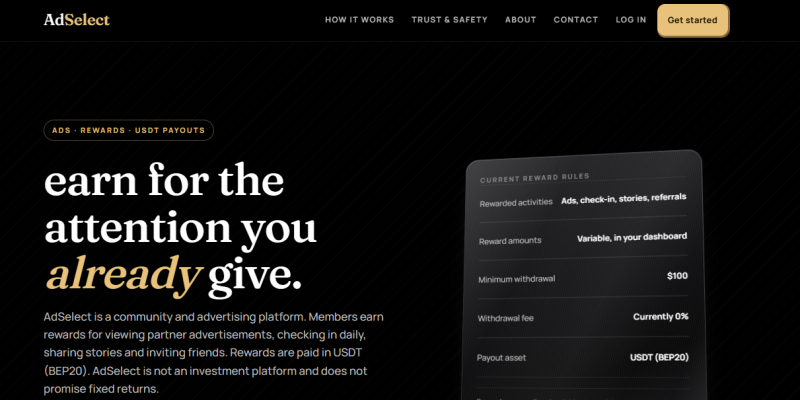
AdSelect describes itself as a community and advertising platform at adselect.net. Members are rewarded for viewing partner ads, daily check-ins, sharing stories and referrals, with rewards paid in USDT on the BEP20 network (BNB Smart Chain). It says advertisers fund the rewards, that it is free to join, and that it is not an investment platform.
The site claims more than 362,500 registered members in over 230 countries. It says it launched in 2026, and its only listed contacts are a support email address and a Telegram support bot. There is no company name, registration number or physical address anywhere on the homepage.
The site lays out four steps:
Look closer and the details don't line up. The homepage says the minimum withdrawal is $100, but its own FAQ says withdrawals start from $10. It advertises a dashboard "in 7 languages," then "6 dashboard languages," then lists only five. Reward amounts are described as "variable" and are only visible after you sign up.
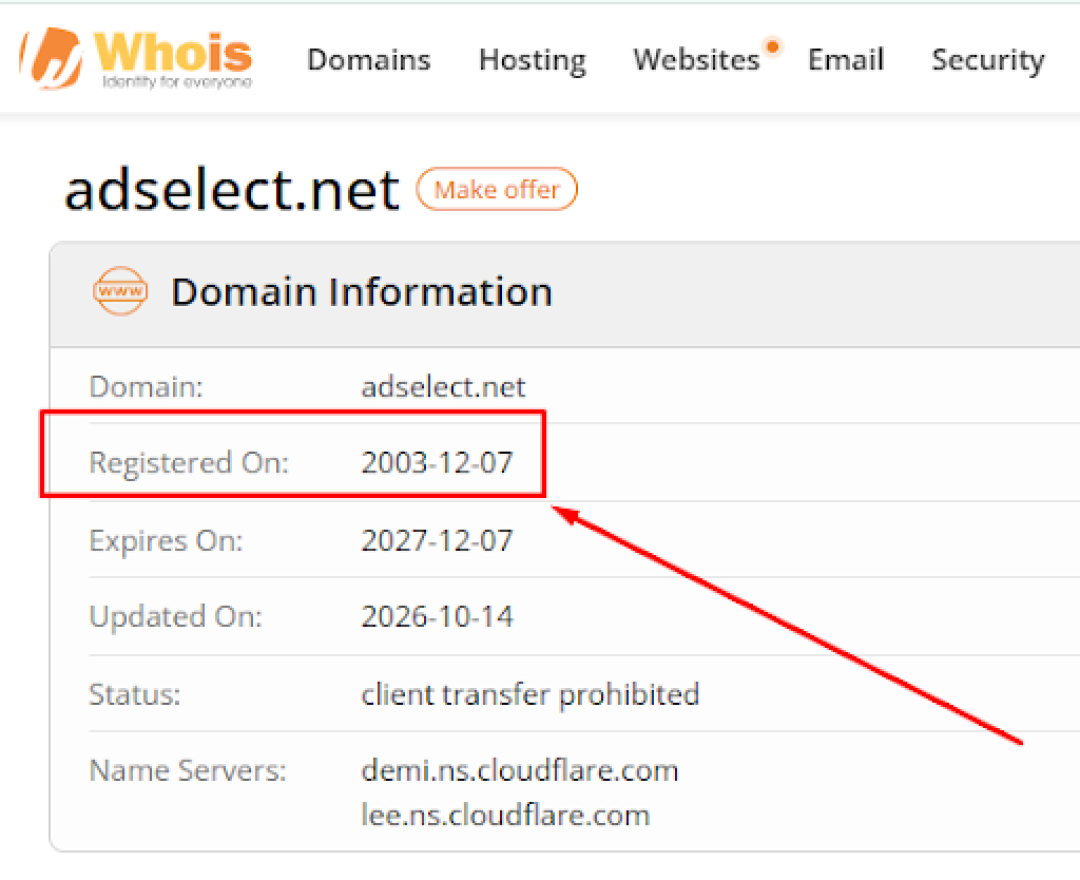
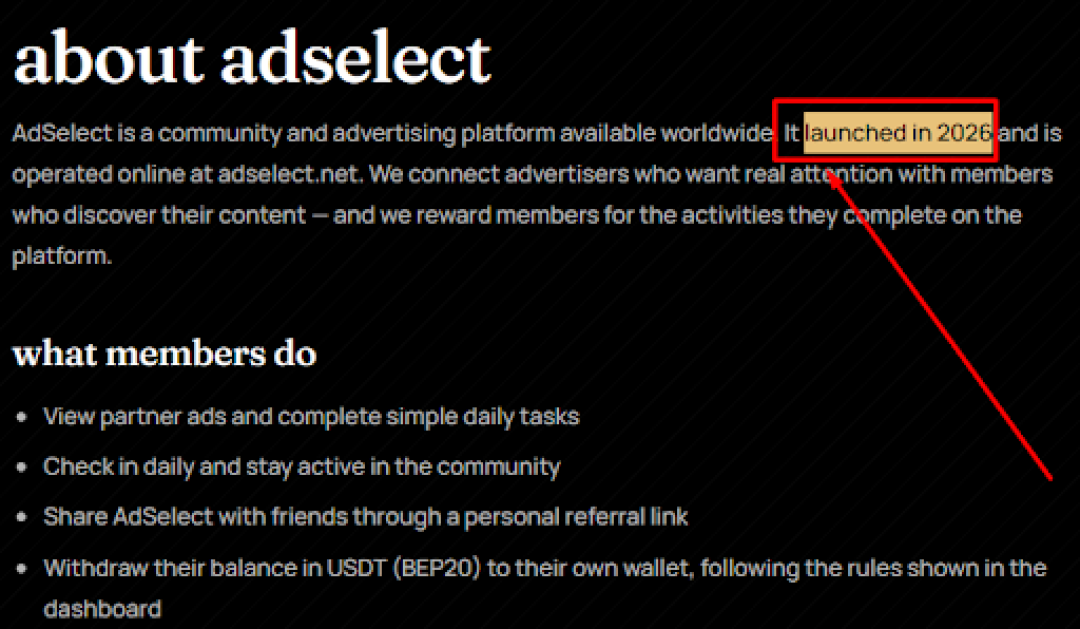
That suggests the current operators may have bought an older, expired or second-hand domain. Buying a domain isn't illegal, but it's a common trick among dubious sites. An old registration date can make a brand-new operation look established and help it pass automated trust checks that penalise young domains.
AdSelect's own FAQ hints at the domain's history. It includes a question asking whether AdSelect is "for sale or shut down," and insists that any "for sale" listing found elsewhere does not refer to the current platform. Legitimate businesses rarely need to answer that question on their homepage.
Platforms that pay small crypto rewards for clicking or watching ads come with well-known risks:
AdSelect's own site says it never charges network fees, unlock fees or deposits before a withdrawal, and that anyone asking for one is a scammer. That is worth remembering: if you are ever asked to pay to release your balance, stop immediately.
Be very cautious about signing up, and never share your seed phrase, passwords or one-time codes. Do not recruit friends or family into a platform you have not seen pay out. If you have already joined, try withdrawing as soon as you can and stop putting in time if it fails. Never pay any fee to unlock a withdrawal. Check unfamiliar "earning" sites with a website checker, and Report a Scam if you are asked for money or your details are misused.
There are serious doubts. AdSelect promises crypto rewards for watching ads and recruiting others, hides who runs it, contradicts itself on its own rules, and uses a domain far older than the platform claims to be. Those are strong reasons to treat it as high risk.
AdSelect FAQ
Is AdSelect real?
AdSelect.net is a real, working website with a sign-up page and member dashboard. Whether it's a genuine business is another question: it names no company, owner or address, which makes it impossible to check who you're dealing with.
Does AdSelect actually pay?
We have not seen verifiable evidence that AdSelect pays its members. If you've been paid or refused a withdrawal, let us know using the form below.
What is the AdSelect withdrawal minimum?
It depends on which page you read. The homepage says $100, while the FAQ says $10. A platform that can't agree with itself on its own payout rules is a warning sign.
Is AdSelect a pyramid scheme?
We can't say that for certain. But AdSelect rewards members for recruiting others and offers "level rewards" for growing a referral network, which is a hallmark of pyramid-style schemes.
Is AdSelect an investment?
AdSelect says it is not an investment platform and doesn't require deposits. If anyone asks you to pay a fee or deposit to unlock your AdSelect balance, it's a scam.
If you believe the article above contains inaccuracies or needs to include relevant information, please contact ScamAdviser.com using this form.
Adam Collins is a cybersecurity researcher at ScamAdviser who operates under a pseudonym for privacy and security. With over four years on the digital frontlines, he specialises in translating complex threats into actionable advice. His mission: exposing red flags so you can navigate the web with confidence.
