
EN
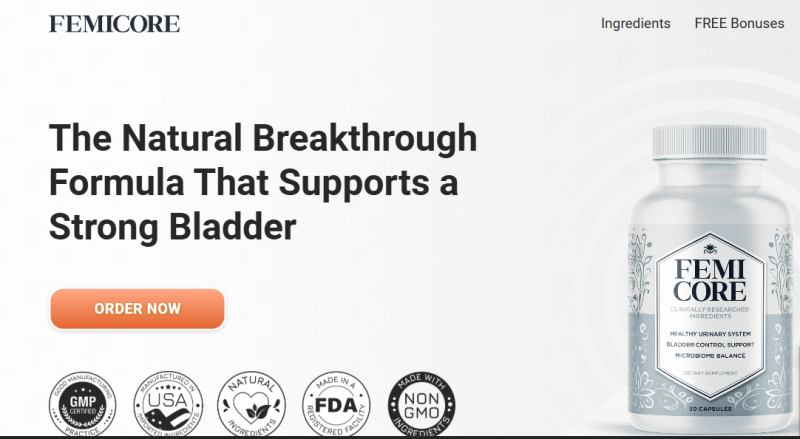
The FemiCore website makes a bold promise. It says the product targets a "microbiome imbalance" that causes involuntary muscle contractions and sudden bladder leaks. That is a specific medical claim for a supplement, and specific claims deserve a closer look before you buy. Here is what we found.
In a Nutshell
The core pitch is that FemiCore is designed to support bladder health by fixing a microbiome imbalance, which the site says is the real cause of involuntary muscle contractions and leaks. Framing a common issue around gut bacteria is a familiar move in supplement marketing. It sounds scientific, but it also lets a company sell almost any pill as the fix, since the microbiome angle applies to a huge range of conditions.
The site pushes a bulk deal: order 6 bottles and receive 3 bonus books for free, including titles like 7 Days To Rekindle The Passion In Your Marriage and Reset Your Gut: Perfect Digestion While Eating Your Favorite Foods. Bundling unrelated ebooks with a supplement is a classic way to inflate perceived value and push customers toward the largest, most expensive order instead of a single trial bottle.
Thefemicore.com was registered on April 14, 2025. A supplement brand making confident health claims and citing major scientific journals would normally have a longer track record. A domain this young, paired with claims this specific, is worth pausing on before you hand over payment details. There is also a strong possibility that FemiCore is being sold through multiple websites, a common practice in the supplement and dropshipping industry, where the same product is marketed under different domains to reach more buyers or replace sites that lose credibility. Before purchasing, it's worth checking who operates the website and whether the product is available elsewhere under a different name.
The FemiCore page lists a long set of scientific references and name-drops respected publications like Nature, Healthline, and Science Direct. Listing citations gives a page an air of authority at a glance. The problem is that naming a journal does not mean the product was studied there, or that the cited research actually supports the specific claim being made next to it. Readers rarely click through and check, which is exactly what this tactic relies on.
FemiCore's own site claims a 4.5 star rating from 19,263 reviews. Check Trustpilot for the same domain and you will find zero reviews. A gap this large between a company's self-reported numbers and independent review platforms is one of the clearest warning signs in online retail. Real review counts in the tens of thousands leave a trail across multiple platforms. This one does not.
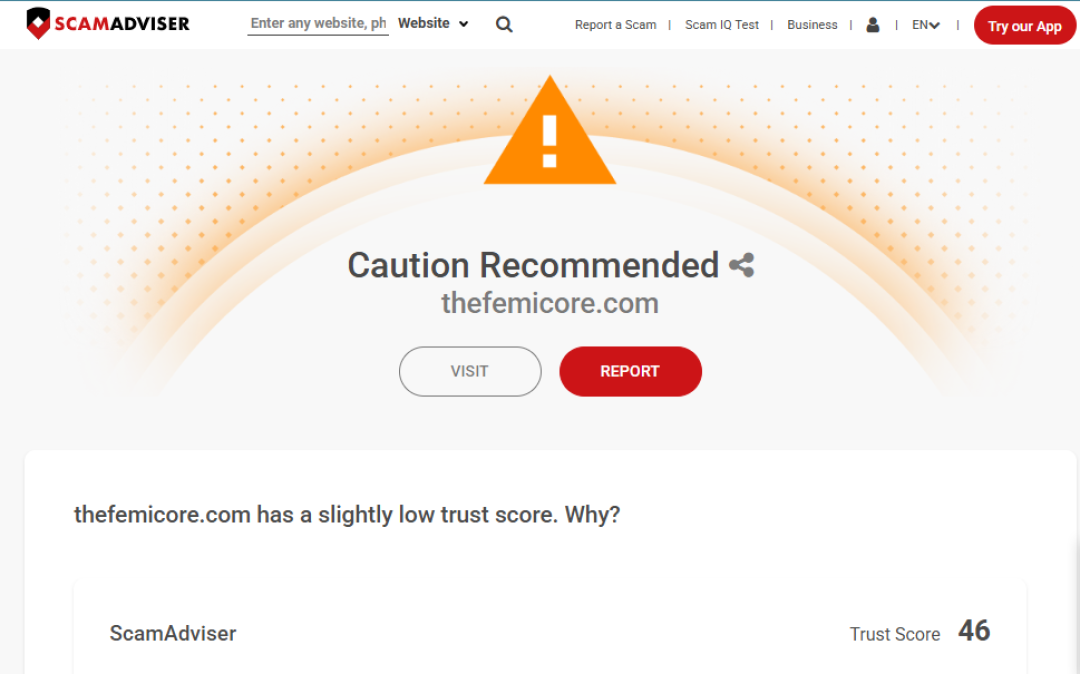
Our check of Thefemicore.com on ScamAdviser turned up a low Trust Score. Among the factors we weighed were similarities to other supplement storefronts that have used the same layout, the same bonus book offers, and the same inflated review claims. Seeing the same playbook reused across different "brands" is a pattern we see often in this corner of the supplement market.
Weigh what we found before ordering. The domain is new. The bonus books are a bulk-order incentive rather than independent proof the product works. The scientific references name respected outlets without demonstrating a real connection to the product. And the review numbers on the site do not match what shows up on Trustpilot.
None of this proves the product cannot work at all, but it does mean the marketing is doing a lot of the heavy lifting that evidence should be doing instead. If you are considering FemiCore, compare it against supplements from sellers with a longer public track record and reviews you can actually verify.
Frequently Asked Questions
Is FemiCore a scam?
The product may be a real supplement, but the marketing relies on tactics common in low-trust supplement sites: a very new domain, inflated review counts, and scientific name-dropping that does not clearly connect to the product's actual claims.
Why does FemiCore claim thousands of reviews with none on Trustpilot?
Self-reported review counts on a company's own site are not independently verified. When a large number like 19,263 does not appear anywhere else, including on Trustpilot, there is no way to confirm those reviews are genuine.
Is citing Nature or Healthline proof a supplement works?
No. Naming a well-known publication next to a claim does not mean that publication studied or endorsed the product. Always check whether the cited research actually supports the specific claim being made.
When was Thefemicore.com registered?
The domain was registered on April 14, 2025, making it a very new website for a company making established medical-sounding claims.
Supplement sites often lean on urgency, bulk discounts, and borrowed scientific credibility to move customers toward checkout fast. Before you enter payment details, it is worth spending a minute checking the seller.
Check the Seller's Reputation
ScamAdviser helps you evaluate a website quickly by showing:
If a seller has a low Trust Score or a short history of complaints, it is worth looking elsewhere.
Stay Protected with the ScamAdviser App

Shopping from your phone? The ScamAdviser App helps you avoid risky websites wherever you browse. Check any shopping site in seconds, get alerts about new scams, verify links before entering payment information, and learn about the latest online shopping tactics.
Pro Tip: If a supplement site cites scientific journals, search the journal directly for the product name before trusting the claim.
This article has been written by a scam fighter volunteer. If you believe the article above contains inaccuracies or needs to include relevant information, please contact ScamAdviser.com using this form.
Adam Collins is a cybersecurity researcher at ScamAdviser who operates under a pseudonym for privacy and security. With over four years on the digital frontlines, he specialises in translating complex threats into actionable advice. His mission: exposing red flags so you can navigate the web with confidence.
