
EN
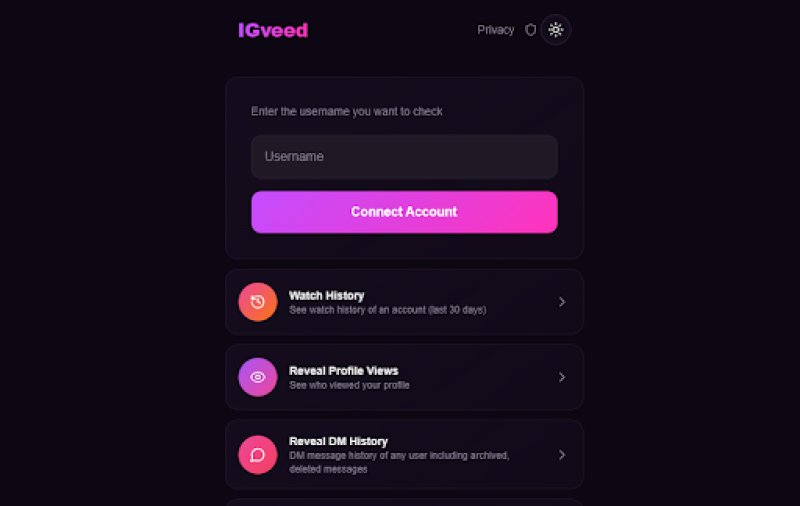
Many people want to know who viewed their profile or who quietly unfollowed them. Igveed.com says it can tell you. The site promises to show the watch history of any account for the last 30 days, reveal profile views, list unfollowers and even display the private DM history of any user, including archived and deleted messages. This scam alert looks at what happens after you click the button and why the promises do not hold up.
The site lists four features:
The DM claim is the biggest one. Private messages are stored on the platform's own servers. A third-party website cannot reach them, and no legitimate tool can show you another person's messages. That alone tells you the site cannot deliver what it advertises.
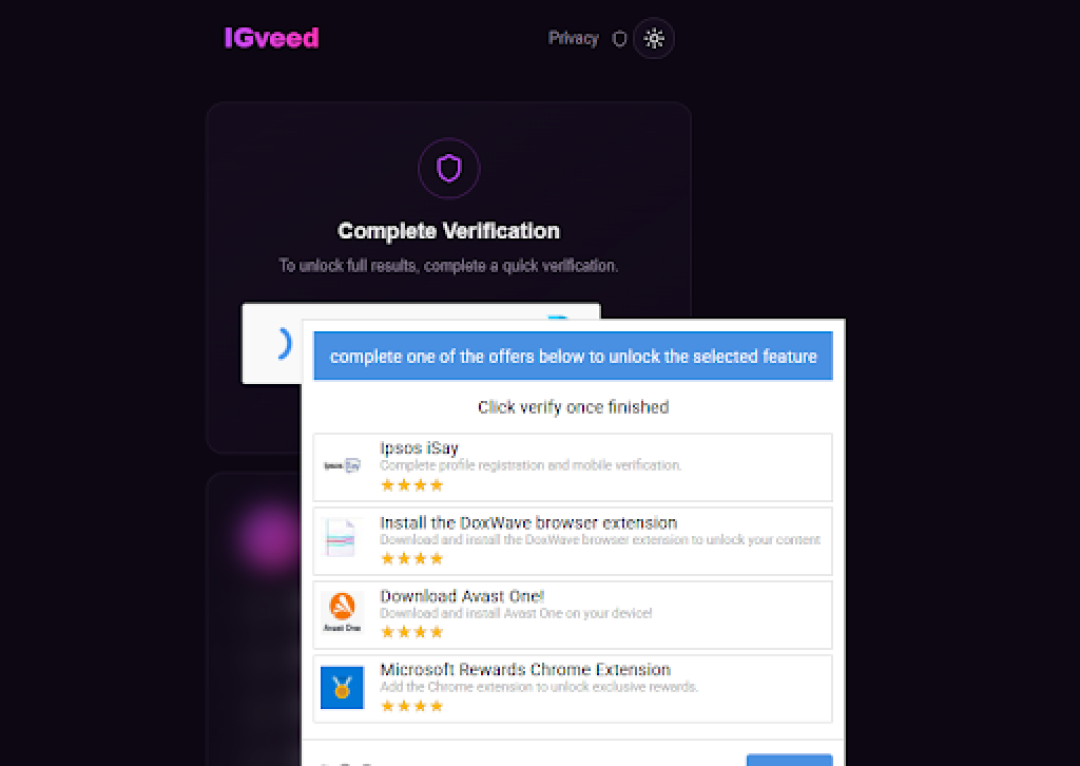
Once you click "connect account," the site does not show you any data. It sends you through a series of tasks, and each one asks you to click "verify" when you finish. The tasks we found include:
None of these have anything to do with viewing a social media account. They are offers from other companies, and the site most likely earns money each time someone completes one. You do the work and the site gets paid, while the results you were promised never arrive.
Task scams follow a familiar pattern. You are promised something valuable, then told you must finish a few steps first. Each step seems small, so you keep going. The reward either never shows up or sits behind one more step.
Anyone who tells you to install something before you can get what you were promised is not being honest with you. It does not matter how well known the software is. Popular names are used because they make the request feel safe. A real service that shows you data does not need you to install an unrelated antivirus program or a browser extension first.
Browser extensions can be powerful. Depending on the permissions you grant, an extension can read the pages you visit, see what you type and change what appears on your screen. An extension you did not research could collect your browsing activity or sign-ins. Even if the extension is harmless, you have still handed over your phone number, your email and your time for nothing.
The name DoxWave deserves extra caution. The word "dox" refers to exposing private information about people, which is an odd thing to attach to a tool you are told to trust.
The site also asks you to connect your account. Never give your social media login to a site that promises hidden data. A criminal who holds your password can lock you out, message your followers or use your account to push the same scam to your friends.
Before you click anything on a site that promises secret information, paste the address into a scam website checker like ScamAdviser. It shows how old the site is and how much trust it has earned. A very new site with sweeping promises is a bad sign. Also ask yourself whether the claim is even possible. If it needs access that no outside tool can have, it is false.
Remove any extension you installed and run a scan with your own security software. Change your social media password and turn on two-step login. If you gave out your phone number or email, watch for strange calls and messages. If Igveed.com took your time or your details, report a scam to ScamAdviser so other people see the warning before they start.
Igveed.com is unsafe. Its main promises cannot be delivered by any outside website, and the steps it asks you to complete are built to push installs and sign-ups. Treat this as a scam alert and keep your account details, your phone number and your browser to yourself. If you are curious about who left your profile, the platform's own settings are the only trustworthy place to look.
This article has been written by a scam fighter volunteer. If you believe the article above contains inaccuracies or needs to include relevant information, please contact ScamAdviser.com using this form.
Adam Collins is a cybersecurity researcher at ScamAdviser who operates under a pseudonym for privacy and security. With over four years on the digital frontlines, he specialises in translating complex threats into actionable advice. His mission: exposing red flags so you can navigate the web with confidence.
