
EN
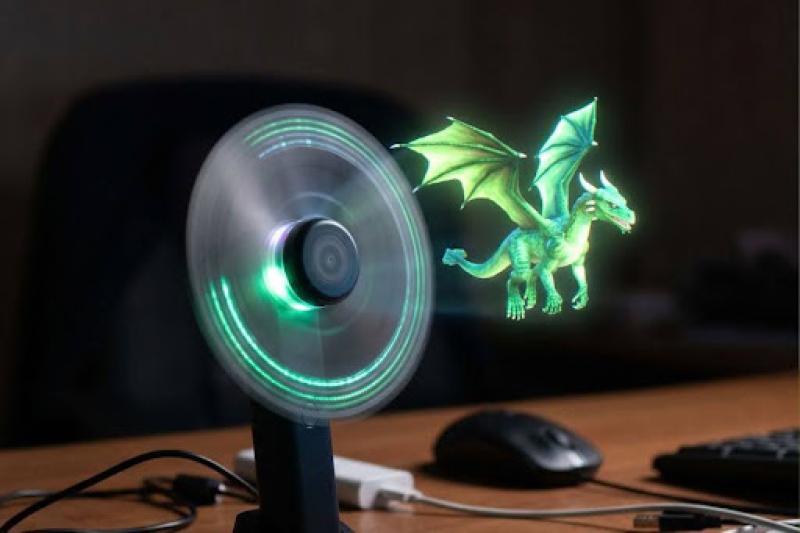
Social media is full of ads for a handheld 3D hologram fan. The clips show dragons, floating faces and glowing magic shields hovering in mid-air with no screen anywhere. It looks like science fiction, so plenty of people wonder whether the videos are faked or made with AI. The hardware is real, but the ads promise more than the device delivers. This consumer guide explains the gap between social media marketing and what you actually receive.
The fan uses blades with LEDs built in. They spin at high speed, often over 700 RPM. The LEDs flash a different image on each pass, and your eyes blend those flashes into one picture. This effect is called persistence of vision. Because the blades move so fast, they look transparent, and the image seems to float.
Content also has to be made for the device. Videos need a pure black background, since LEDs cannot show black. Those pixels simply stay off, which leaves the graphic looking like it hangs in the air by itself.
No. A true hologram is a volumetric projection or a light-interference image that looks three-dimensional from every physical angle without any trickery. A hologram fan is a flat, spinning 2D display. The "3D" look comes from the black background and the way your eyes read the motion. Calling it a hologram is a marketing choice, and buyers who expect a real one will be let down.
Online clips often look far sharper than the real thing. Camera shutter speeds can sync with the rotation of the fan, which removes any flicker and hides the spinning blades. The viewer loses the usual frame of reference that would show a machine is doing the work.

Source: YouTube
In person, the experience is different. You can sometimes see the blades, and staring at the display for too long may cause mild dizziness or eye strain. A bright room also weakens the effect, because the picture works best against dark surroundings. Some ads may add computer graphics on top of the footage as well, so a clip is a poor guide to what you will see at home.
The product itself is legitimate. Retail stores and trade shows use these units to attract attention, and they do the job well. The trouble comes from how some sellers present them. A video that shows a dragon flying through a living room sets up an expectation the fan cannot meet. A shopper who pays for that promise may feel cheated, even though the fan works as designed.
Problems can also show up at checkout. A product advertised heavily on social media may be sold through a store you have never heard of, at a price well above what other sellers charge, with vague return terms.
Run the shop through a scam website checker like ScamAdviser to see how old the site is and how much trust it has earned. If a seller used misleading footage or failed to deliver, report a scam to ScamAdviser so other shoppers see the warning.
The hologram fan is real technology, but it is a flat spinning display, not a true hologram, and the ads make it look better than it does in your hands. If you want one as a fun gadget or for a shop display, it can do the job when you buy from a trusted seller and set your expectations. Treat dramatic videos as marketing embellishments and research sellers before making a purchase. If a seller promises sci-fi results, check the facts first and keep your receipt.
This article has been written by a scam fighter volunteer. If you believe the article above contains inaccuracies or needs to include relevant information, please contact ScamAdviser.com using this form.
Adam Collins is a cybersecurity researcher at ScamAdviser who operates under a pseudonym for privacy and security. With over four years on the digital frontlines, he specialises in translating complex threats into actionable advice. His mission: exposing red flags so you can navigate the web with confidence.
