
EN
In a Nutshell
Smishing—SMS phishing—isn’t just rising, it’s dominating. According to FBI Internet Crime Complaint Center data, it’s now one of the most reported cybercrime types. And on Reddit, investors are sharing near-identical stories: a sudden “account suspended” text, a spike of panic, and a link that looks just real enough.
If you’re here, chances are that message just hit your phone—and it’s designed to make you react fast. That urgency is the entire trick.
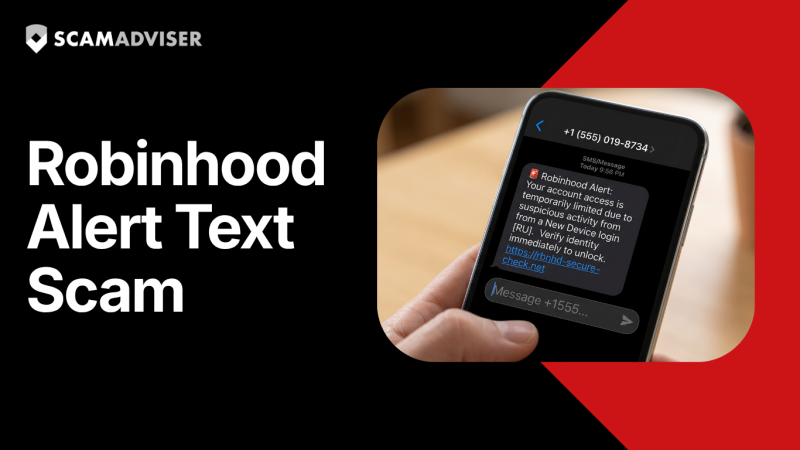
Here’s the reality: if you get a random text claiming your account is locked or accessed by a “new device,” it’s almost certainly a phishing attempt. Robinhood doesn’t handle serious account alerts through random SMS links—it uses secure in-app notifications.
Most of these messages follow a script. Something like:
“Robinhood: Your account has been temporarily locked due to suspicious activity. Verify here: [link]”
It feels official. It sounds urgent. That’s the point.
A few tells give it away quickly. The message often comes from a normal phone number instead of a short code. The tone is aggressive—“immediate action required” or “account will be permanently closed.” These phrases are designed to rush you before you think.
Once you slow down and look at it critically, it starts to fall apart.
That link is the entire scam.
Scammers create fake domains that look convincing at a glance—slight tweaks, extra words, or different endings. It might feel like a small detail, but it’s the difference between logging in safely and handing over your account.
A real link will always point back to the official domain. Anything else is a trap.
If you’re ever unsure, copy the link and check it using a trusted tool like ScamAdviser before doing anything else. It takes seconds and can save your entire portfolio.
This isn’t just a basic fake website—it’s a real-time trap.
You click the link, land on what looks like a normal login page, and enter your details. On the other side, the scammer is watching it happen live. They use your credentials instantly.
Even 2FA isn’t a guarantee here. The fake site will ask for your code, and the moment you enter it, the scammer uses it on the real platform before it expires.
This is known as a Man-in-the-Middle attack—and it works because it relies on timing and trust, not hacking.
No system is broken. You’re simply being tricked into opening the door.
Users on Reddit describe receiving alerts about logins from places like Russia or unfamiliar devices. That detail alone is enough to trigger panic.
Some even report the scam appearing in the same message thread as legitimate codes. That’s due to SMS spoofing—where scammers mimic trusted senders to blend in.
So even if it “looks” like a trusted conversation, don’t rely on appearance alone. Always verify independently.
The safest move? Ignore the message and open the app yourself. If something is wrong, you’ll see it there immediately.
Real messages are far less dramatic.
They’re usually limited to codes you requested or alerts tied to actions you initiated. They won’t ask you to fix problems through a link.
Most serious alerts come through email or directly inside the app. And even then, the safest habit is simple—go straight to the app instead of clicking anything.
Inside the app, you can check your security settings, review logged-in devices, and confirm instantly whether anything is off.
No guesswork needed.
If you interacted with the message, speed matters.
Log in to the official app and change your password immediately. This can cut off access before any damage is done.
Then secure your funds—unlink bank accounts if needed, lock cards, and review any pending transfers.
After that, contact support through the app and report what happened. Ask them to monitor or temporarily restrict your account if necessary.
And before you delete the message, take a screenshot. It could help with reporting.
Forwarding the message to 7726 (SPAM) helps your mobile carrier block similar attacks. It’s a small step that has a ripple effect.
You can also report it to the Federal Trade Commission via ReportFraud.ftc.gov. These reports help track scam patterns and shut down fake domains.
Even sharing your experience online helps others recognize the signs faster.
If a message about your money creates instant panic, that’s your signal to slow down—not speed up.
You can explore, question, even push back—but always stay in control. The moment a message tries to rush you into action is the moment to step away and verify things on your own terms.
Adam Collins is a cybersecurity researcher at ScamAdviser who operates under a pseudonym for privacy and security. With over four years on the digital frontlines and 1,500+ days spent deconstructing thousands of fraud schemes, he specialises in translating complex threats into actionable advice. His mission: exposing red flags so you can navigate the web with confidence
