
EN

A video circulating online claims that a sanitation worker named Samuel saved a newborn baby from a garbage truck. According to the video, Samuel, a veteran worker with 25 years of experience, was running his usual early morning route when he heard a high pitched wail coming from the truck’s hopper.
According to the video’s description, Samuel reaches for the lever to compact the garbage when his partner suddenly shouts, “Sam, wait! I thought I heard something!” This is where the tension in the video builds. Samuel hears a thin, high pitched wail that doesn’t sound like a kitten or any usual street noise. His heart races as he scrambles to see the source of the sound, setting the stage for a supposedly dramatic rescue.
Then Samuel peering down into the hopper of the garbage truck. Inside a soaked duffel bag, wrapped in a stained towel, is a newborn baby. According to the narrative, Samuel, who is a grandfather, lifts the baby with surprising gentleness despite his rough and dirty hands. His partner calls 911 while Samuel cradles and comforts the child, whispering soothing words.
Paramedics appear shortly after, and the video presents this as a real moment where a sanitation worker saves a life in an unexpected situation.
The video does not show where or when the incident supposedly happened. There are no city names, street signs, or timestamps, which are usually present in real-life rescue videos.
The baby’s right hand appears to be missing a thumb for the first few seconds, and it doesn’t seem to be hidden behind the other fingers. Such errors are common in AI-generated videos.


The white and orange labels on the garbage truck are unreadable. From this camera distance, these words should be at least a little clear if the video were real.

A car in the background toward the end of the video looks blurred and unnatural. Visual inconsistencies like this are typical in AI-generated content, especially during complex movements.
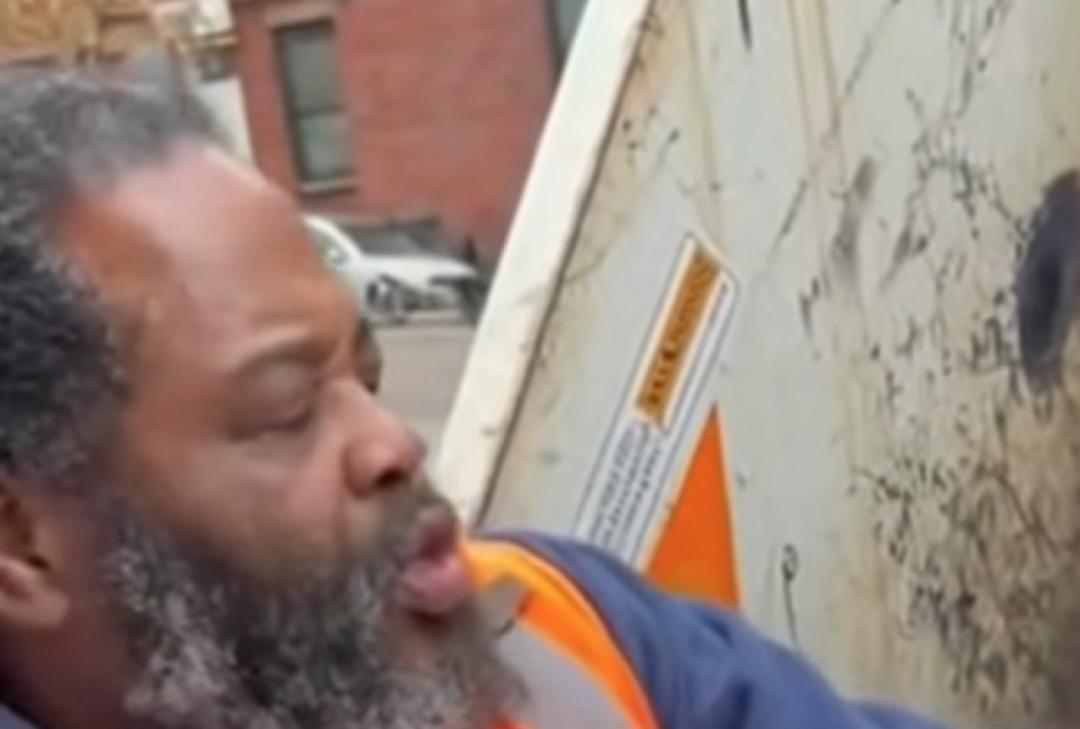
The video’s sound, texture, and overall effect resemble AI-generated content, particularly videos made with tools like Sora AI. Slight blurring, unusual movement, and unnatural lighting are all common signs.
Despite the dramatic story, there is no coverage of this event in any news outlet. A real life baby rescue would almost certainly be reported by local or national media.
The Facebook account that posted the video, Dailystories, has a history of uploading AI-generated content. This pattern strengthens the suspicion that the Samuel video is also fabricated. Accounts that repeatedly post AI-generated or digitally manipulated content often produce videos designed to go viral, leveraging emotional storytelling and dramatic visuals to attract views and shares.
After examining the video closely, it is clear that the clip of Samuel saving a baby from a garbage truck is not real. The baby, the truck, and the entire scenario are digitally created, designed to look convincing while being entirely fictional. While the story of a sanitation worker heroically saving a child is compelling, in this case, it is purely AI-generated content.
This viral video serves as a reminder of the increasing sophistication of AI tools that can create realistic looking, emotionally charged videos. It also highlights the importance of verifying online content before sharing it, especially when it involves scenarios that are designed to trigger strong emotional responses.
