
EN
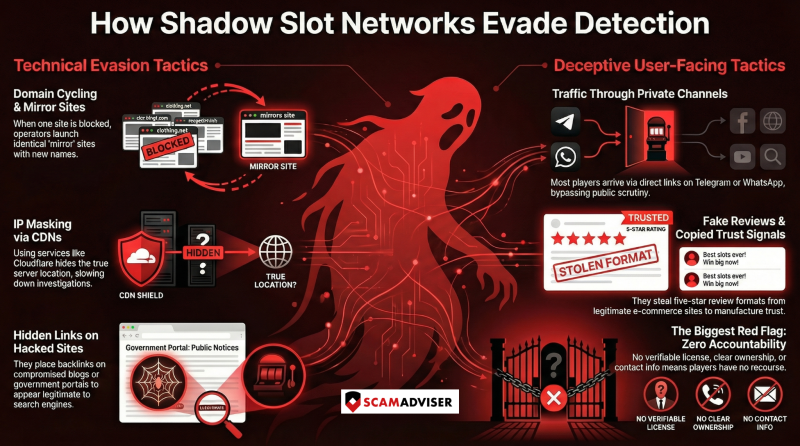
In a nutshell:
These slot sites do not survive by accident. They use a set of well-tested tactics designed to stay one step ahead of blocks, complaints, and regulators. Once you recognize the pattern, the names matter far less than the methods.
One of the most common tricks is domain cycling. When a gambling site is blocked or reported, operators simply launch a new version under a slightly different name. Sometimes it is just a number added at the end. Other times it is a small spelling change or a different extension.
This is why players often see names like slotgacor1, slotgacor2, or slotgacorvip appear within days of each other. These are not competitors. They are mirrors. Traffic is quietly redirected, Telegram groups are updated, and the old domain is abandoned without explanation.
For players, this creates confusion. A site that looks familiar feels safe, even when the domain itself is brand new.
Another layer of protection comes from IP masking. A large portion of illegal gambling sites use content delivery networks such as Cloudflare. While these services are legitimate and widely used, they also make it harder to identify where a site is actually hosted.
Instead of revealing the real server location, visitors and authorities only see the CDN’s infrastructure. This slows down enforcement and makes takedowns far more complicated. By the time one site is investigated, several others are already live.
For users, this means the site can look technically “secure” while hiding who really operates it.
Unlike legitimate businesses, these sites do not rely heavily on search engines. Most traffic comes through Telegram groups, WhatsApp broadcasts, and social media posts. Influencers and affiliate accounts share direct links that bypass public filters and blocks.
This method has two advantages. First, links can be replaced instantly when one stops working. Second, users arriving through private channels are less likely to research the site beforehand. The focus is on speed, bonuses, and urgency.
By the time doubts appear, money is already deposited.
In many cases, the site name does not appear openly on its own. Instead, it shows up as a hidden or embedded link on unrelated websites. These can include abandoned blogs, hacked pages, or even high authority domains such as educational or government portals in different countries.
This is a known black hat SEO tactic. It helps gambling sites appear more legitimate to search engines while staying under the radar. To a user, the link looks out of place. To an algorithm, it looks trustworthy.
The result is visibility without accountability.
Search results linked to these domains often include five-star reviews, “star seller” labels, or testimonials that look convincing at first glance. On closer inspection, many of these are copied word for word from legitimate e-commerce platforms.
The goal is simple. Borrow trust from brands people already recognize. When users see familiar language and review formats, skepticism drops. Very few stop to check where the reviews actually came from.
Trust is manufactured, not earned.
Perhaps the biggest red flag is what is missing. There is no verifiable gambling license. No registered business entity. No clear ownership structure. Contact details are vague, temporary, or routed through messaging apps only.
Without licensing or transparency, there is no real accountability. If a withdrawal is blocked or a site disappears, there is nowhere to escalate the issue. That is not a technical problem. It is a design choice.
You do not need to be a tech expert to stay safe. Patterns like domain cycling, hidden ownership, and private traffic channels are red flags anyone can learn to spot. The ScamAdviser app makes this easier by helping you check websites in seconds and avoid high-risk gambling platforms.

