
EN
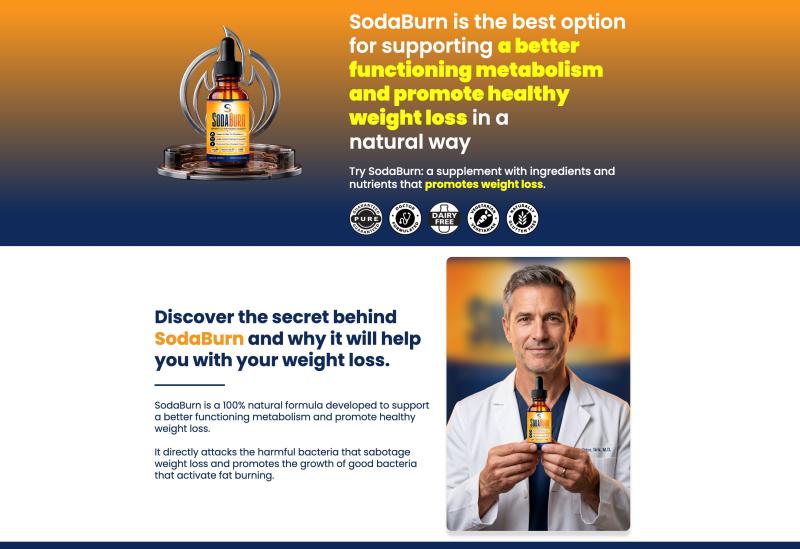
SodaBurn is marketed online as a liquid dietary supplement designed to support healthy metabolism, manage appetite, and promote weight loss. Available primarily through numerous online storefronts and popular third party marketplaces, this liquid formula aims to provide a convenient alternative to standard weight-management capsules.
However, a closer look at the publicly available information, ingredient labels, and conflicting marketing materials suggests that consumers may want to exercise caution before purchasing.
According to the official promotional materials found on various web domains, the Soda Burn supplement is designed to target multiple physiological pathways simultaneously. The primary marketing claims suggest that the product:
When reviewing the primary SodaBurn ingredients printed on the official Supplement Facts label as provided by some storefronts, the formula appears to rely heavily on a singular proprietary blend. Publicly available images of the label indicate the following breakdown:
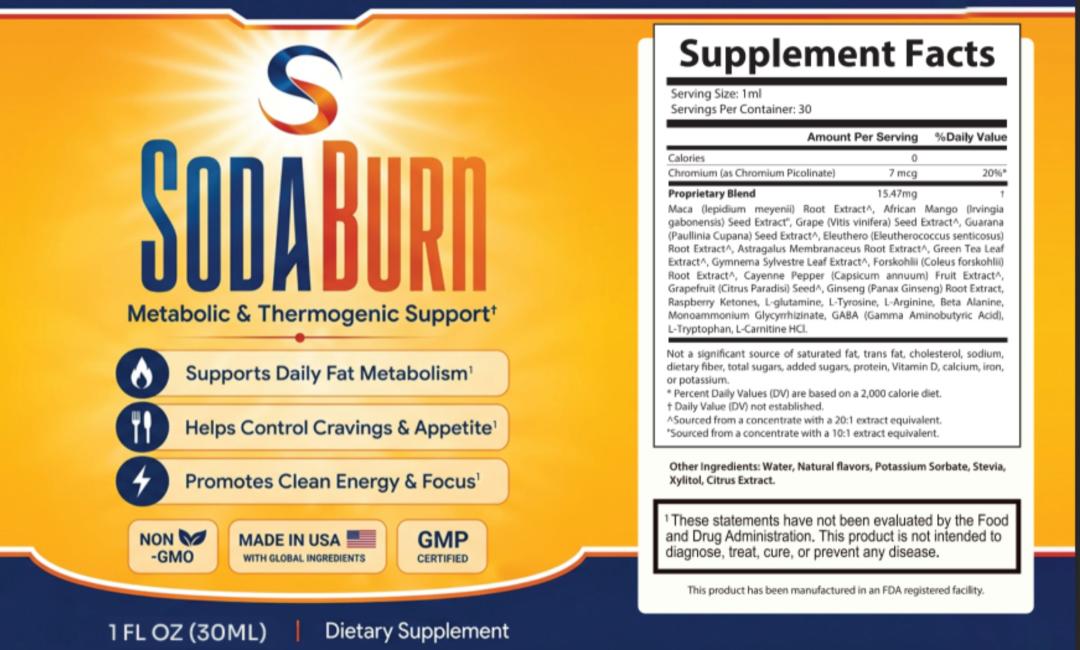
Chromium Picolinate:
The formula provides a disclosed amount of 7 mcg of Chromium per serving. Chromium is widely recognized for its role in supporting normal macronutrient metabolism, though its independent impact on significant weight reduction may be limited.
The Proprietary Blend (15.47 mg total):
The remaining active components are grouped together into a blend totaling 15.47 mg per serving. This blend lists several distinct ingredients, including Maca Root Extract, African Mango Seed Extract, Green Tea Leaf Extract, Guarana Seed Extract, Grape Seed Extract, and various amino acids like L-Carnitine and L-Glutamine.
From a nutritional science perspective, the total weight of the proprietary blend raises questions regarding potency. In independent clinical trials, botanical extracts such as Green Tea or African Mango Seed are typically studied at dosages ranging from 150 mg to 500 mg per day to observe measurable metabolic effects. Because the entire SodaBurn proprietary blend totals only 15.47 mg, the individual amount of each of the 19 ingredients may be minimal.
Consequently, the physiological impact of these components at such low thresholds may not align with the robust outcomes highlighted in promotional advertisements.
A comprehensive review of the public information across multiple distributed websites reveals several inconsistencies that consumers may wish to consider:
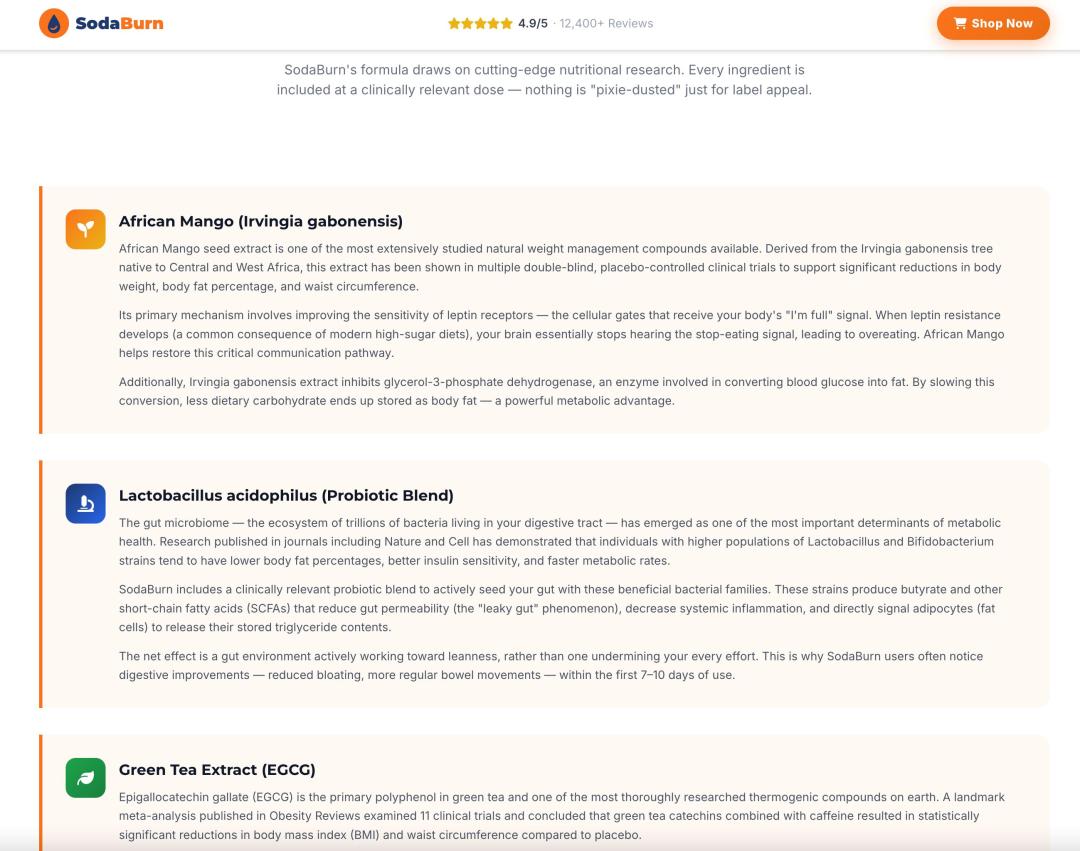
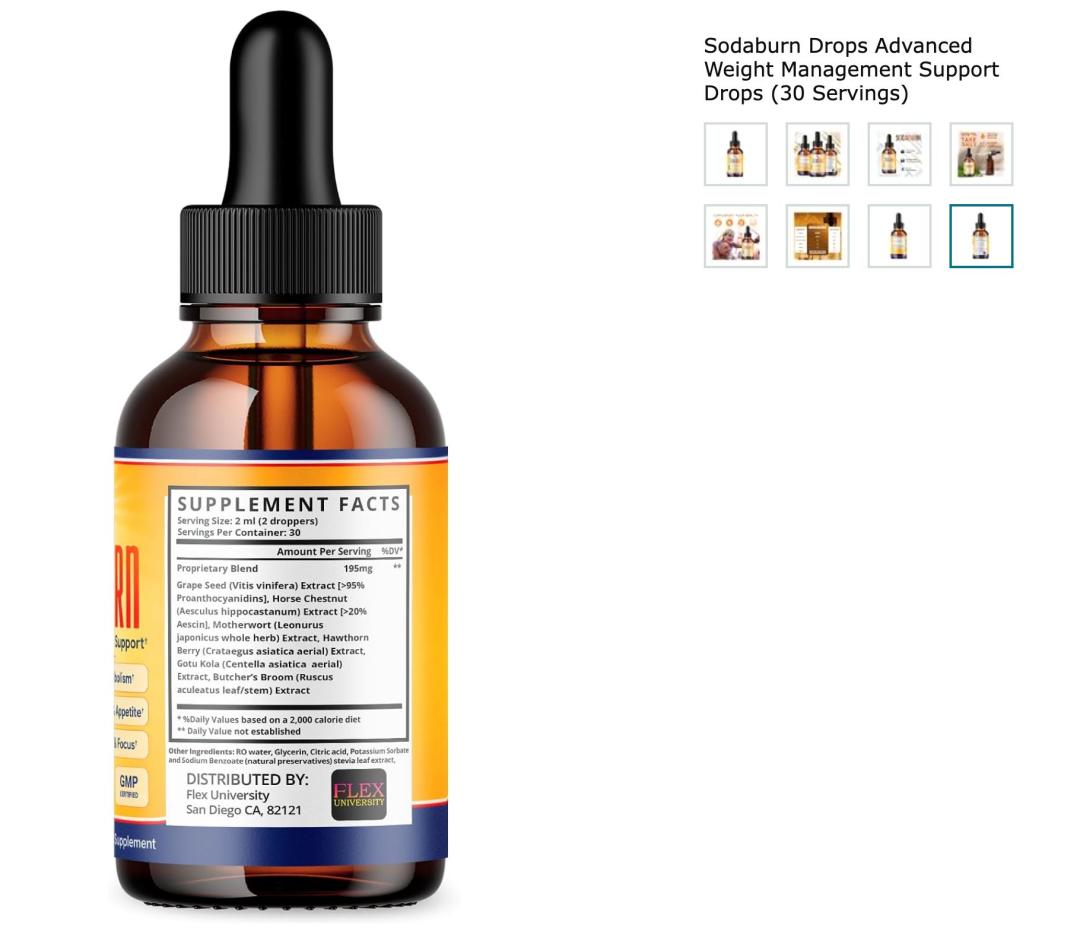
Different storefronts selling the SodaBurn supplement appear to utilize entirely different product narratives. For instance, certain landing pages heavily promote a "clinically relevant probiotic blend" containing Lactobacillus acidophilus designed to alter the gut microbiome. However, the physical Supplement Facts labels visible on alternative official storefronts show no probiotics or live bacteria cultures listed on the ingredient panel.
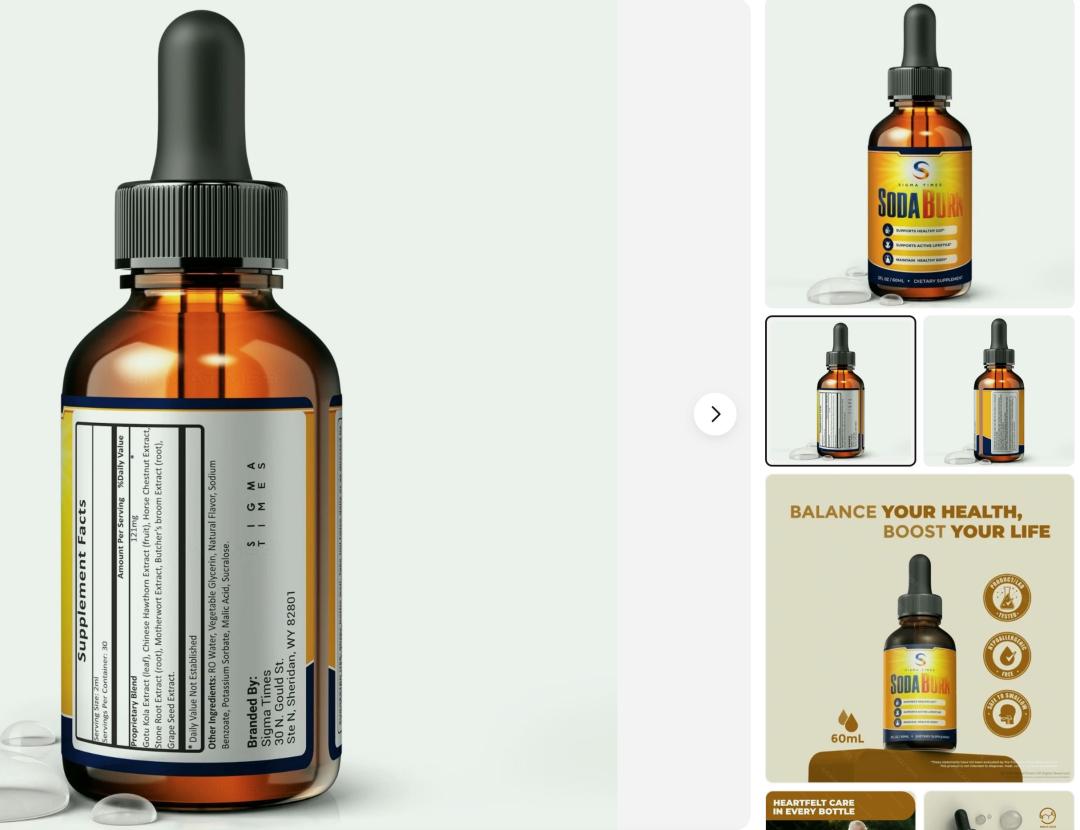
When examining listings for the SodaBurn supplement on third party platforms like Amazon and eBay, the formula variations seem to multiply. Publicly available images from these listings display entirely different ingredient profiles, serving sizes, and manufacturing origins.
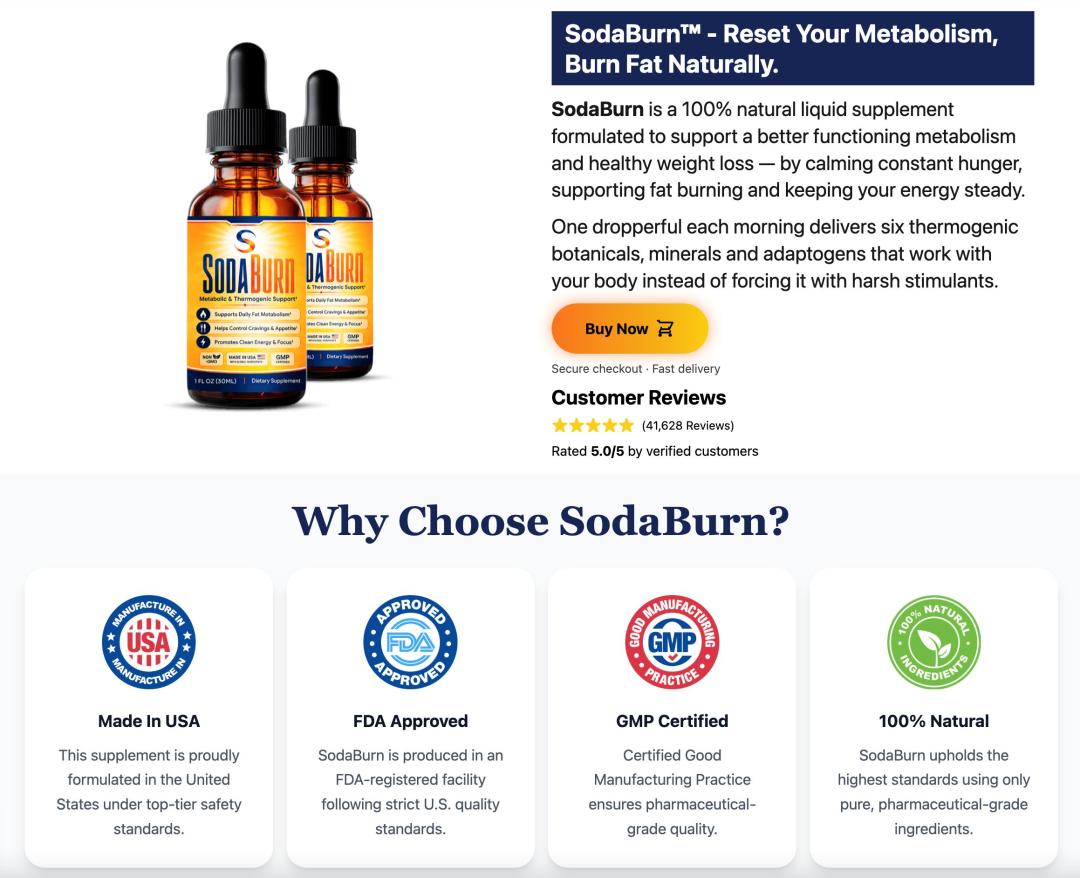
Promotional graphics for the SodaBurn supplement frequently feature prominent badges highlighting an "FDA-Registered Facility". Public consumer guidance notes emphasize that facility registration is a standard regulatory requirement for manufacturing locations and does not constitute official FDA approval, evaluation, or endorsement of the dietary supplement itself.
To provide an objective overview, here is a look at what may or may not work regarding the product based on current consumer data:
Convenient Format:
The liquid dropper system may be highly appealing to individuals who experience difficulty swallowing traditional pills or capsules.
Transparent Purchasing Terms:
The official channels state that purchases are processed as a one-time transaction rather than forcing an automated monthly subscription.
Trace Nutrient Support:
The inclusion of Chromium Picolinate on some variants of SodaBurn provides a legitimate trace mineral that supports general metabolic function.
Formula Volatility and Label Inconsistency:
A primary concern seems to be the lack of a standardized formula. The dramatic variation between the ingredients shown on primary storefronts and those found on third-party marketplaces indicates that consumers may not receive a uniform product.
Absence of Formula-Specific Clinical Testing:
A significant drawback seems to be that the finished SodaBurn formula itself does not appear to have undergone any independent, peer-reviewed clinical trials to prove its effectiveness or safety for weight management.
Dosing Constraints:
The microscopic amount of individual botanicals within the proprietary blend may be insufficient to trigger significant metabolic or thermogenic shifts.
Marketing Ambiguity:
The conflicting explanations regarding whether the product is a probiotic gut-health formula or a stimulant-based thermogenic drop may cause consumer confusion.
Third Party Supply Risks:
Buying the product outside of the primary official channel appears to carry a high likelihood of receiving completely different herbal ingredients than what was originally expected.
Ultimately, the SodaBurn supplement appears to be a real physically existing product that is actively manufactured and shipped to consumers, meaning it may not fit the literal definition of an outright fraud in the sense of non-delivery of a product. However, the substantial differences between the advertised claims and the micro-dosed reality of the Supplement Facts label represent significant marketing hype.
Furthermore, the public evidence highlights some critical issue: the presence of wildly conflicting ingredient labels, entirely different formulations on third-party platforms, and a lack of dedicated clinical validation on the finished formulation of Soda Burn Supplement itself, with data existing only on individual ingredients. This lack of consistency across platforms suggests that the product ecosystem may lack centralized quality control and reliable manufacturing standards.
Consumers looking for transparent, clinically backed weight management options may find it beneficial to avoid these unverified marketplace and storefront listings and consult a qualified healthcare provider to explore verified dietary strategies.
This objective review is for educational, informational, and critical commentary purposes only. All observations are based on an independent evaluation of publicly available marketing materials, ingredient labels, domain behaviors, and third party consumer feedback at the time of writing.
This content provides a neutral analysis of documented retail inconsistencies without making definitive accusations regarding the legality of the involved business entities. It neither promotes nor condemns the product or its operational practices. Individual experiences may vary; consumers are encouraged to autonomously evaluate marketing claims and digital transparency before purchasing.
All product names, logos, and trademarks (including "SodaBurn" or "Soda Burn") belong to their respective owners. They are used here under fair use guidelines solely for descriptive and identification purposes.
This commentary does not constitute professional medical advice, diagnosis, or treatment. Always consult a licensed healthcare professional before introducing any new dietary or wellness supplements to your routine.
This article has been written by a Scam Fighter Contributor, De-Reviews.com Team. If you believe the article above contains inaccuracies or needs to include relevant information, please contact ScamAdviser.com using this form.
De-Reviews.com Team is a group of scam researchers, editors, and online safety advocates dedicated to exposing online fraud and helping consumers stay safe online. The team has been investigating scams, fraudulent websites, phishing campaigns, and other online threats since 2014. Read the Full Author Profile.
