
EN
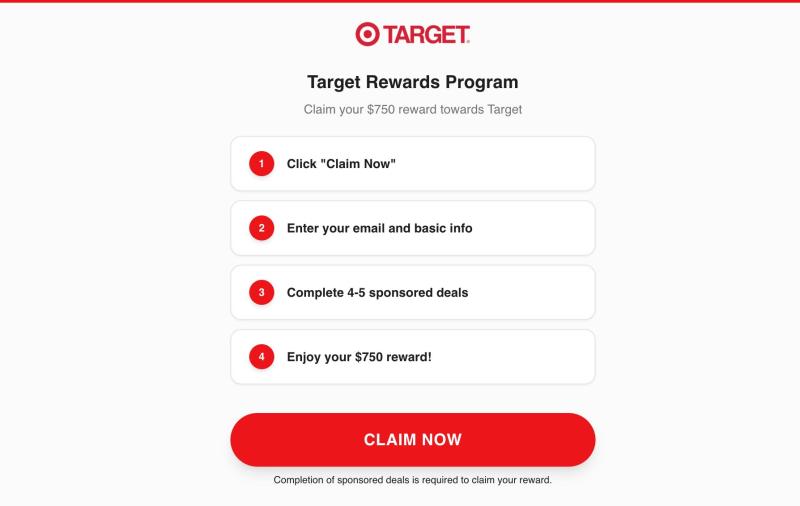
Online users are increasingly encountering messages, pop-ups, and websites claiming they can receive free Target gift cards or rewards, sometimes worth $700, $750, or even $1000, just for completing a simple task or clicking a link. At first look, these offers may look exciting and legitimate, especially because they use the name of a well known retailer like Target. However, these promotions are not connected to Target in any way.
In reality, these are part of a growing category of gift card scams that are designed to trick users into sharing personal data, completing fake surveys, or engaging with suspicious websites. This article explains how the scam works, how to identify it, and how to stay safe.
Target gift card scams are fraudulent schemes where scammers pretend to offer free rewards or gift cards in the name of Target. These scams usually appear on random websites with unrelated or newly registered domain names. They are not hosted on the official Target website (target.com) or any verified social media accounts of Target.
These fake platforms typically promise:
But in reality, no such free reward programs exist. These sites are only designed to misuse the trust and popularity of Target to attract victims.
We have previously covered similar patterns where websites were misusing the Target brand name, including investigations into platforms such as TarGifted.com in our article.
Other related cases include Taroffers.com and Orodeals.com, which also falsely claimed users could claim high value Target gift cards.
These scams usually follow a predictable pattern:
Users see ads on social media, email, or pop-ups claiming: You have been selected for a $750 Target gift card. Claim your free reward now before it expires.
Clicking the ad leads to a website that looks simple, often with poor design or unrelated domain names. These are not official Target pages.
Users are asked to:
After completing tasks, users never receive any gift card. Instead, they may be exposed to:
There are clear signs that these Target gift card offers are not legitimate:
Legitimate companies such as Target do not randomly give away high-value gift cards through third-party websites. This issue is not limited to Target alone. Similar schemes frequently misuse the names of other well-known brands, such as Costco, Walmart, etc. to create a false sense of trust. We have also documented cases involving fake $700 or $750 Costco gift card offers that falsely claim to be associated with Costco.
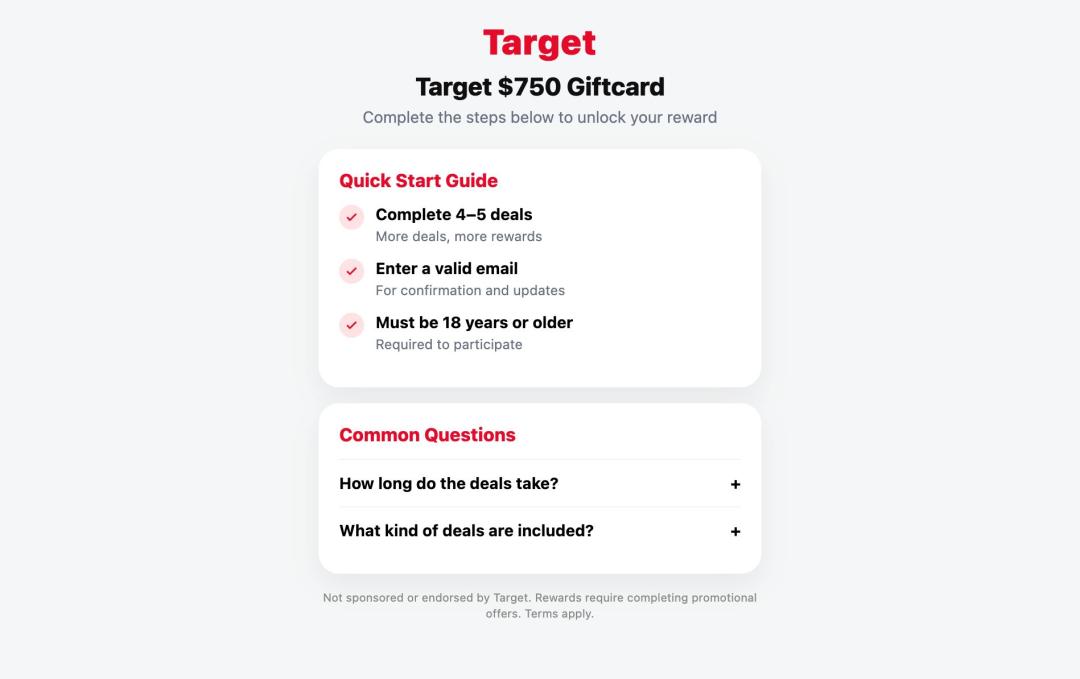
This scam is not limited to Target. Fraudsters frequently misuse other well known brands to build trust.
For example:
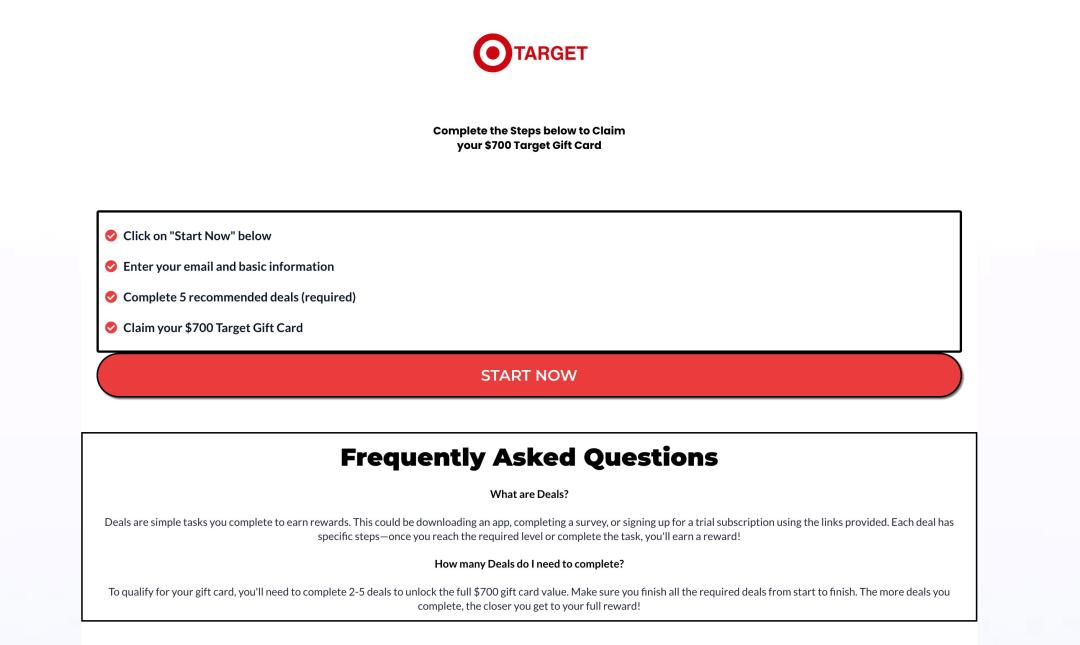
These examples show that scammers reuse the same formula across multiple brands, changing only the company name and reward amount.
If you come across a free gift card offer, watch out for these warning signs:
If even one of these appears, the offer is likely fraudulent.
Users who interact with these scams may face several risks:
Even if no direct payment is involved, your data itself becomes valuable to scammers.
To protect yourself from Target gift card scams and similar frauds:
Being cautious is the most effective way to avoid falling victim.
Target gift card scams are part of a larger online fraud trend where scammers impersonate trusted brands to lure users into fake reward schemes. These offers are not connected to Target or any official promotion. They exist only to collect user data or drive traffic to misleading websites.
The same scam tactics are also being used against other major brands like Costco, McDonald's, Crumbl Cookies, and Walmart, showing how widespread and adaptable these schemes have become.
The key takeaway is simple i.e. if a free gift card offer looks effortless and unusually generous, it is almost always a scam.
Disclaimer: This article has been written by a Scam Fighter Contributor, De-Reviews.com Team. If you believe the article above contains inaccuracies or needs to include relevant information, please contact ScamAdviser.com using this form.
