
EN
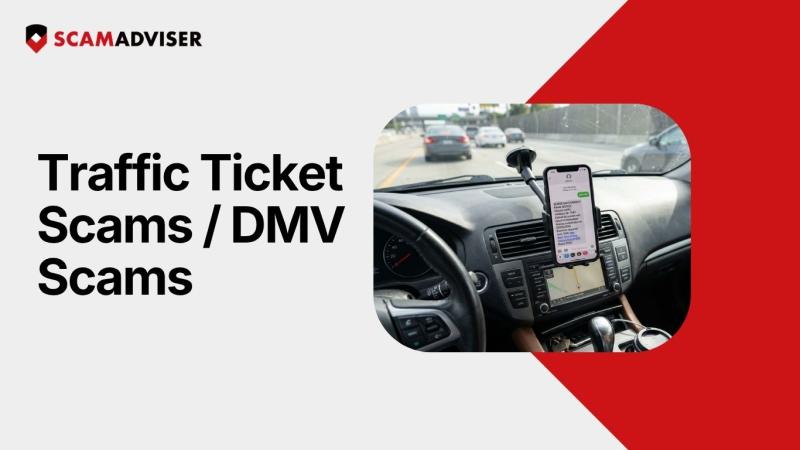
Your phone buzzes with a text from your state DMV warning about an "overdue traffic ticket." The message includes a link to pay immediately to avoid a suspended license. This is a scam.
No US Department of Motor Vehicles sends payment demands by text message. This specific fraud campaign is active across all 50 states, and the DMVs in Alaska, California, Colorado, Florida, Connecticut, Georgia, Texas, and New York have all issued formal warnings in 2025 and 2026.
In a Nutshell
A traffic ticket scam text message looks like an urgent, threatening alert demanding immediate payment through an attached link. The message claims to come from "the DMV" or your state's driver services. It states you have an "unresolved traffic citation" or "overdue traffic ticket" that requires your immediate attention.
To force you to act quickly, the sender threatens severe penalties: suspension of your vehicle registration, loss of driving privileges, damaged credit, prosecution, and a 35% service fee for non-payment. The message usually comes from an unfamiliar or international area code and always includes a link to a fake payment page.
Here is an exact example of the DMV text scam 2026 circulating right now:
"[STATE DMV]: Your vehicle registration is at risk due to an unresolved traffic citation. To avoid immediate suspension and a 35% penalty fee, pay now: [malicious link] — Failure to act will result in legal proceedings."
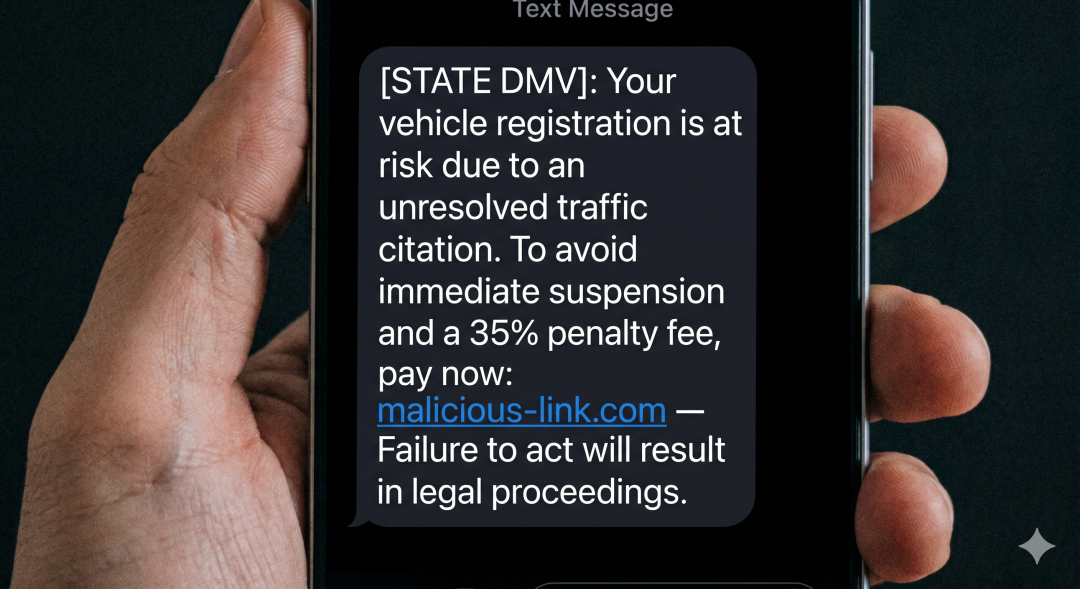
Example of a DMV scam
You know a DMV text is a scam because real government agencies mail official notices through the postal service rather than demanding money via SMS. Real DMVs only call people who have actively applied for a service or requested contact. Furthermore, most DMVs do not even collect traffic fines directly — local courts handle those payments.
What Scam Texts Do What Real DMVs Do Send unsolicited payment demands by text Mail official notices by physical letter Threaten immediate license suspension via SMS Call only for people who applied or requested contact Use international phone numbers Use official domestic government numbers only Demand payment via a link Direct you to official .gov website to verify fines Threaten prosecution in a text message Never threaten arrest by text Claim DMV collects traffic fines directly Most DMVs do not collect traffic fines at all (courts do)Scammers want your credit card numbers, personal identity details, and Social Security Number. When you click the link in the fake DMV overdue traffic ticket text, you land on a fraudulent payment portal. If you try to pay the fake fine, you hand your debit or credit card information directly to criminals.
Many of these sites also require you to fill out a form with your name, address, date of birth, and driver's license number. Some variants even request your Social Security Number, claiming they need it for "identity verification."
You should ignore the message, report it, and delete it immediately. If you got a text about an unpaid ticket and are wondering if it is real, follow these exact steps to protect yourself:
You must contact your bank or credit card issuer immediately to dispute the fraudulent transaction. Time is your biggest enemy when criminals have your financial details.
Criminals target drivers because traffic violations are a common, highly believable stressor for almost everyone on the road. Most people have worried about a speed camera or a parking meter expiring, making the claim of an unpaid ticket feel plausible. The fear of losing your license or vehicle registration creates an intense urgency that shuts down your critical thinking.
Scammers impersonate the DMV because it holds real authority over your daily life. This tactic is a direct evolution of recent toll road scams — criminals are simply reusing the same infrastructure to steal money from drivers.
Government agencies do not send payment demands, arrest warrants, or license suspension threats by text message. The DMV will never text you a link asking for your credit card. If you receive a message demanding money and claiming to be from the government, your skepticism is completely justified — it is a fraud.
When you feel unsure about your driving record, always check through official channels by navigating to your state's actual .gov website yourself. Report fake texts to the FTC at ReportFraud.ftc.gov and forward the SMS to 7726.
They don't need a real warrant to steal your money — they just need you to panic.
Frequently Asked Questions
Can I get arrested for ignoring a text about an unpaid traffic ticket?
No, law enforcement agencies do not issue arrest warrants or notify you of legal proceedings via text message.
Will the DMV ever text me about my license or registration?
The DMV will never text you to demand payment or threaten suspension, though some states send automated appointment reminders if you opted in.
How can I safely check if I actually have an unpaid traffic ticket?
Navigate directly to your local municipal court or state DMV official .gov website and search your license plate or driver's license number.
What happens if I clicked the link in the fake DMV text but didn't enter any info?
Simply close the browser tab and run a malware scan on your phone, as clicking the link rarely compromises your device unless you download a file or enter data.
Adam Collins is a cybersecurity researcher at ScamAdviser who operates under a pseudonym for privacy and security. With over four years on the digital frontlines, he specialises in translating complex threats into actionable advice. His mission: exposing red flags so you can navigate the web with confidence.
