
EN

Scams in 2026 are not louder or sloppier. They are calmer, cleaner, and far more convincing. Artificial intelligence is doing the heavy lifting, biometrics are becoming the main target, and scammers are exploiting the same routines people rely on every day. Fraud is no longer about obvious red flags. It is about blending in so well that nothing feels wrong until it is too late.
This is what the next generation of scams looks like, and why awareness matters more than ever.
In a Nutshell
Are phishing scams evolving beyond email and text messages? Absolutely, but more importantly, phishing itself isn’t disappearing. We’ll still see familiar scams like fake toll road notices, Apple subscription alerts, and delivery messages. They’ll just keep showing up in more places.
Phishing has always followed convenience. In 2026, that means inboxes, messaging apps, websites, QR codes, and even physical mail. While QR code scams aren’t new, they remain effective, especially when paired with offline interactions or official-looking notices that lower suspicion.
The key takeaway is simple: phishing will persist because it works. The safest habit is to treat any unexpected request for payment or login with caution, regardless of how it reaches you. When in doubt, skip the link or scan and go directly to the official app or website instead.
Biometric data is becoming the new password, and scammers are collecting it aggressively. As banks and fintech platforms adopt Face ID and voice verification for high-risk actions, fraudsters are focusing on high-quality biometric harvesting.
Fake recruiters are inviting victims to professional-looking video interviews on custom platforms. The conversation feels normal, but the system is recording facial angles, blinking behavior, and voice samples. That data can later be used to bypass liveness checks and access financial accounts.
This is why job scams in 2026 are not always about fake salaries. Many exist purely to harvest identity data.
If a company insists on using an unfamiliar interview platform or requests identity verification before a real conversation, that is a serious warning sign.
Romance scams and pig butchering scams are becoming fully automated. Instead of human scammers juggling conversations, autonomous AI agents now scrape social media in real time and build detailed profiles of potential victims.
These systems know when someone is lonely, grieving, newly wealthy, or emotionally vulnerable. Conversations feel natural because they are personalized using real information, not generic scripts. AI can maintain thousands of long-term conversations simultaneously and wait months before introducing an investment opportunity or financial request.
This scale makes pig butchering scams more dangerous than ever.
If an online relationship avoids real-world meetings, consistently experiences video call issues, or gradually steers conversations toward crypto or investments, assume manipulation rather than coincidence.
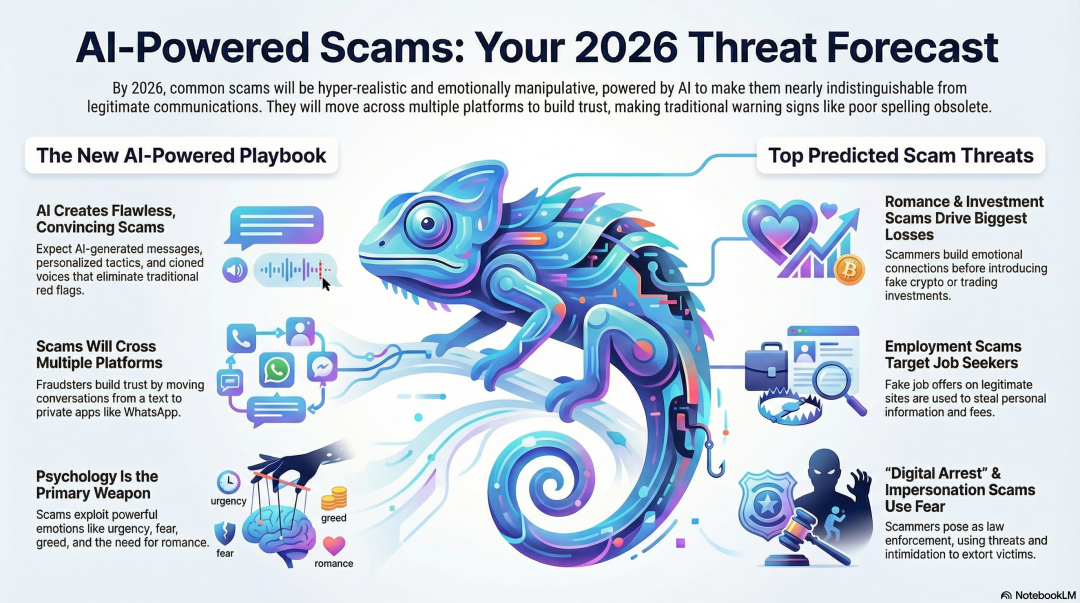
Scammers in 2026 rarely stay on one platform long enough to be reported effectively. A scam may start with a wrong-number text, move to WhatsApp or Telegram, and end on a fake bank or cryptocurrency website.
This platform hopping is intentional. By fragmenting the interaction, scammers make it difficult for victims and platforms to reconstruct the full scam journey.
Anyone who pressures you to move conversations to private or encrypted apps quickly should be treated with caution.
In previous years, asking for a selfie or video call helped confirm identity. In 2026, that method no longer works reliably. AI-generated faces, voices, and live deepfakes are convincing enough to pass casual verification and even some automated checks.
This means trust must shift away from appearances and toward independent verification methods. Seeing is no longer believing.
In a scam environment driven by speed and realism, independent verification tools are critical. The ScamAdviser app helps identify suspicious websites, detect risky domains, and flag known scam patterns before damage is done.
Instead of relying on gut feeling or last-minute Google searches, the app allows users to check links, businesses, and offers in real time. In a world where scams look professional and familiar, having a trusted second opinion can be the difference between staying safe and losing money.
In 2026, protection is not about reacting after the fact. It is about checking first.
Frequently Asked Questions
What is a pig butchering scam?
A pig butchering scam is a long-term fraud where scammers build trust through relationships before convincing victims to invest or send money, often using fake trading platforms.
Are romance scams really run by AI now?
Increasingly, yes. Many conversations are handled by AI systems that personalize messages, timing, and emotional responses at scale.
How can I spot a fake job interview?
Be cautious of unfamiliar platforms, rushed hiring processes, and requests for video verification or biometric data early in the process.
Are QR codes safe to use?
QR codes themselves are not dangerous, but unverified codes can lead to phishing websites and payment scams.
How can I avoid scams in 2026?
Slow down, verify independently, avoid urgency, limit data sharing, and use scam detection tools like ScamAdviser before acting.
Scams in 2026 are designed to feel normal. The strongest defense is not technical expertise, but a habit of questioning convenience and verifying everything independently.
