
EN
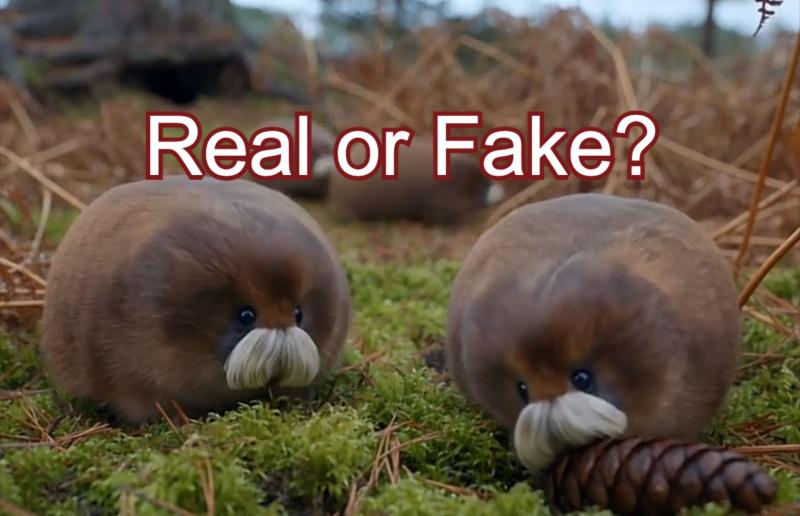
White Tash Haggis has been capturing the attention of nature enthusiasts across the internet as a fascinating new viral sensation. Videos showcasing a tiny, furry, and round organism have spread widely on social media platforms, leaving many viewers wondering if this unique creature is a genuine member of Scotland's local wildlife.
These clips often trace back to a dedicated social media presence known as the Haggis Wildlife Foundation on TikTok, where the White Tash Haggis is shown navigating dense moss and forest floors. But what exactly is the truth behind the White Tash Haggis?
According to various online clips, the White Tash Haggis appears to be a small mammal native to the woodlands and highlands of Scotland. Visually, the White Tash Haggis looks like a blend between a large potato, a hamster, and a tiny seal. The most notable visual marker of the White Tash Haggis seems to be its prominent, bright white bristle mustache, often referred to in local dialect as a "tash".
Observers note that the White Tash Haggis appears to move in small groups through open ground and undergrowth. In these shared clips, the narrator describes the White Tash Haggis as a species that seeks out specific seasonal foods like "neeps" and avoids fictional regional predators.
While the video footage looks remarkably lifelike, historical context and modern digital technology suggest that the White Tash Haggis may not be a living, breathing biological organism. Crucially, the White Tash Haggis seems to be absent from authentic biological databases as we are unable to find it within any recognized scientific registry of wildlife.
For centuries, Scotland has maintained a famous piece of cultural folklore centered around the "Wild Haggis". Traditional stories frequently tell travelers that the culinary dish is made from hunting a real, asymmetrical animal on steep hillsides.
The online depiction of the White Tash Haggis seems to be a modern extension of this classic cultural joke. Furthermore, the visuals of the White Tash Haggis align closely with what advanced digital effects and text-to-video software can produce. The smooth fur texture, the specific mustache style, and the slightly unusual movement patterns indicate that the White Tash Haggis may be the result of highly skilled digital artistry rather than natural evolution.
The widespread curiosity surrounding the White Tash Haggis highlights the power of creative storytelling in the digital age. The creators behind the Haggis Wildlife Foundation social media accounts appear to have crafted an entertaining ecosystem around the White Tash Haggis to engage the public and celebrate Scottish humor.
By utilizing a documentary-style narration and highly detailed environments, the videos give the White Tash Haggis an authentic atmosphere. This artistic approach may easily confuse viewers who are unfamiliar with the long-running history of the wild haggis myth in Scottish culture. Rather than being an actual wildlife discovery, the White Tash Haggis seems to be an educational or satirical project designed to showcase digital media capabilities.
Ultimately, the question of whether the White Tash Haggis is real or fake may simply come down to a matter of folklore versus reality. Scientifically speaking, a documented animal matching the exact description of the White Tash Haggis does not seem to appear in official records, nor does the Scottish White Tash Haggis appear to be documented within any authentic biological database.
Instead, the White Tash Haggis may safely be viewed as a delightful piece of internet world-building. It serves as a reminder of how digital tools can breathe new life into traditional legends, allowing the legendary White Tash Haggis to capture minds all over the world.
Image Source: Screenshot taken from the viral TikTok Video titled "White Tash Subspecies of Wild Scottish Haggis Animals".
The information presented in this article reflects a cultural commentary and review of public digital media trends surrounding the online phenomenon known as the White Tash Haggis.
All observations regarding the media clips and social accounts, including the Haggis Wildlife Foundation, are based on widely shared public internet footage and are discussed here for educational, entertainment, and informational purposes only. This text does not explicitly claim to confirm the exact biological reality, corporate intentions, or technical origin of the media mentioned, nor does it seek to definitively accuse any party of intent to misinform. All conclusions regarding the nature of the White Tash Haggis are purely analytical interpretations of modern digital folklore.
This article includes references to the account name and screenshots from public video clips for the purpose of criticism, commentary, and news reporting. Such use appears to qualify as "fair use" under applicable copyright laws. All trademarks, names, and visual materials belong to their respective copyright holders. The use of these references and screenshots does not imply any affiliation with, endorsement by, or promotion of the original creators or copyright owners.
This article has been written by a Scam Fighter Contributor, De-Reviews.com Team. If you believe the article above contains inaccuracies or needs to include relevant information, please contact ScamAdviser.com using this form.
De-Reviews.com Team is a group of scam researchers, editors, and online safety advocates dedicated to exposing online fraud and helping consumers stay safe online. The team has been investigating scams, fraudulent websites, phishing campaigns, and other online threats since 2014. Read the Full Author Profile.
