
EN
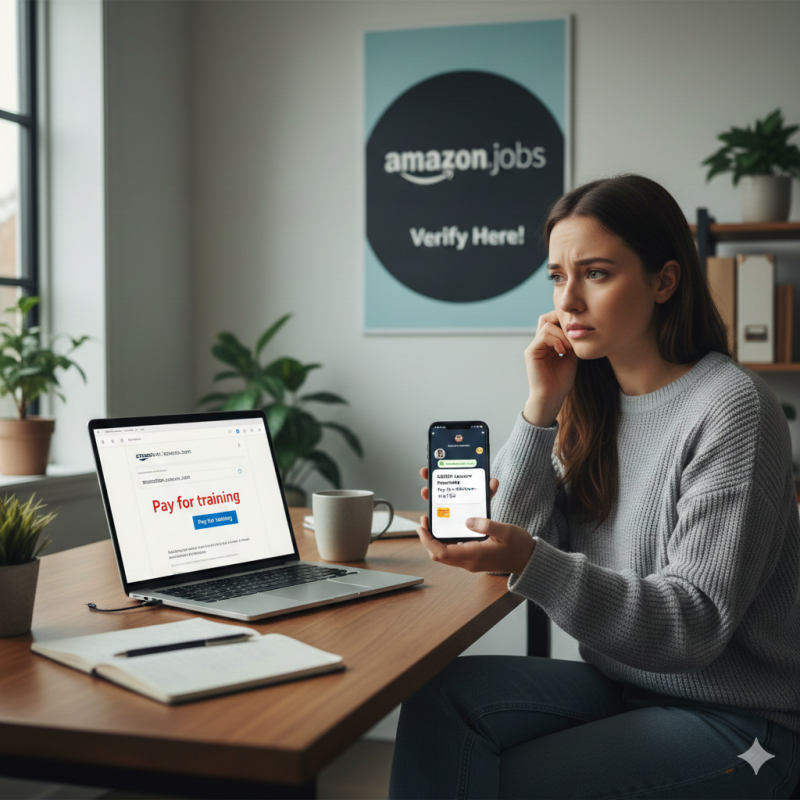
In a Nutshell
• Fake Amazon recruiters are contacting Americans through text, Gmail, WhatsApp, Telegram, and social media.
• These scammers introduce a fake payment step — often framed as training, equipment, onboarding, or background check fees.
• Amazon will never ask you to pay during hiring.
• Real openings appear only on amazon.jobs, and recruiters use @amazon.com or @amazon.jobs emails.
Job hunting in the United States has become increasingly risky as online employment fraud continues to surge. In September and October 2025, scammers intensified a nationwide campaign impersonating Amazon recruiters and offering fake work-from-home roles. Many job seekers searching for legitimate remote opportunities or trying to complete Amazon job verification checks found themselves targeted by convincing messages claiming to come from the company.
These impersonators are not offering real roles. They are running a sophisticated Amazon remote job scam designed to steal money or personal information under the guise of onboarding, training, or employment processing. This article explains how the fraud works, how to stay safe, and how to verify an Amazon recruiter email before becoming a victim.
One of the biggest challenges for job seekers today is determining whether Amazon is recruiting for real when they receive unexpected messages about remote roles. Scammers are exploiting this confusion by presenting themselves as professional, urgent, and highly persuasive. Because Amazon is a trusted brand — and because many Americans genuinely want remote work — victims are more likely to believe a recruiter who contacts them out of the blue.
What begins as interest in an opportunity quickly becomes an attempt at recruiter impersonation, where the scammer’s entire focus is to introduce a fraudulent payment requirement and rush the decision-making process.
Everything usually starts with an unsolicited approach. Victims report identical patterns: a message from a Gmail or unfamiliar domain, a promising job description, and a link inviting them to continue the conversation on apps like WhatsApp or Telegram. This shift away from official communication tools is designed to lower scrutiny and increase control — a tactic seen frequently in broader work from home scam activity.
The impersonator then outlines a role that sounds easy and well-paid. Many victims describe being offered remote positions that require no interviews or skills assessment, which should immediately raise alarms for anyone trying to complete even basic Amazon job verification steps.

The moment the applicant expresses interest, the fraudster introduces the key requirement: a payment. Some claim the money is needed for “mandatory training,” “resume evaluation,” or “software access.” Others describe it as “verification charges,” often demanding payment through gift cards or crypto. This fits a growing search trend where queries like “Amazon recruiter asking for money” and “payment for Amazon training materials” have spiked as victims try to make sense of what they’re being told.
Any request for money signals an impersonation scam. Amazon does not charge for training materials, onboarding, background checks, or equipment. If someone insists otherwise, the safest course of action is to immediately stop communication and report the Amazon scammer through official channels.
The effectiveness of the fraud lies in the emotional timing. Job seekers may already be feeling pressure or urgency, and scammers amplify this by promoting roles that sound ideal: flexible schedules, high pay, and easy remote tasks. Many victims who later researched the messages often discovered rising search trends such as “Amazon job offer WhatsApp” or “Amazon remote job scam”, which mirror the exact method scammers used to contact them.
The authority of the Amazon brand is the final ingredient. When a scammer uses Amazon’s logo, tone, or vocabulary, job seekers often skip verification steps — especially those who aren’t aware that the safest way to verify an Amazon recruiter email is to check the sender’s domain directly.
The most reliable way to determine if Amazon is actually recruiting is to check whether a role appears on the official career website, amazon.jobs. If the listing does not exist there, it is not real. Amazon does not outsource interviews or initial outreach to messaging platforms, and it does not issue job offers through WhatsApp groups, Telegram channels, or unsolicited texts.
Email domains matter as well. Real recruiters only use addresses ending in @amazon.com or @amazon.jobs. Anything else — no matter how similar — is an impersonation attempt. This simple step stops the majority of online employment fraud involving Amazon branding.
Lastly, hiring always includes legitimate stages such as interviews or assessments. Any process that skips formal evaluation and moves directly to payment is a textbook Amazon remote job scam.
If someone claiming to be an Amazon recruiter requests money, stop communication immediately. Do not click links, send documents, or transfer any funds. The safest next step is to report the Amazon scammer through Amazon’s Trustworthy Shopping Website (TWS) so their investigation team can take action. Sharing your experience with others is equally important, especially as these scams continue to spread across multiple platforms.
Fake Amazon job offers are increasing because they successfully mix hope, urgency, and brand trust. They target people searching for remote work and pressure them to act before verifying information. But no matter how convincing the pitch may sound, one rule remains absolute: Amazon will never ask you to pay to get a job. If a recruiter demands money, the job is fake, the process is fraudulent, and you are dealing with a scammer — not Amazon.
FAQs
How can I tell if an Amazon job is legit?
A legitimate Amazon job will always be listed on amazon.jobs, and any communication will come from an official Amazon email address. If you’re unsure, the fastest method is to verify the Amazon recruiter email by checking whether the domain ends in @amazon.com or @amazon.jobs. Real roles also involve interviews or assessments, not instant job offers.
How can you tell a fake job offer?
Fake offers usually involve unsolicited messages, unusual communication channels like WhatsApp, and fast-moving processes with no interviews. The strongest indicator is payment — especially when someone demands money for onboarding, equipment, or training materials. That is always a sign of recruiter impersonation.
Does Amazon have legit work-from-home jobs?
Yes. Amazon regularly hires remote staff in customer service, administrative support, HR, and other areas. However, scammers often mimic these roles, which is why Amazon job verification through official channels is essential.
How much will Amazon pay you to work from home?
Pay depends on job type and location, but legitimate remote roles typically align with standard industry rates. What Amazon does not offer are extremely high-paying, low-effort positions. Offers that claim otherwise often lead back to an Amazon remote job scam.
